Item 1 of 1
Properties
Properties of the Stone
Additional Names
Marmor Lacedaemonium, Porfido Verde Serpentino
Color
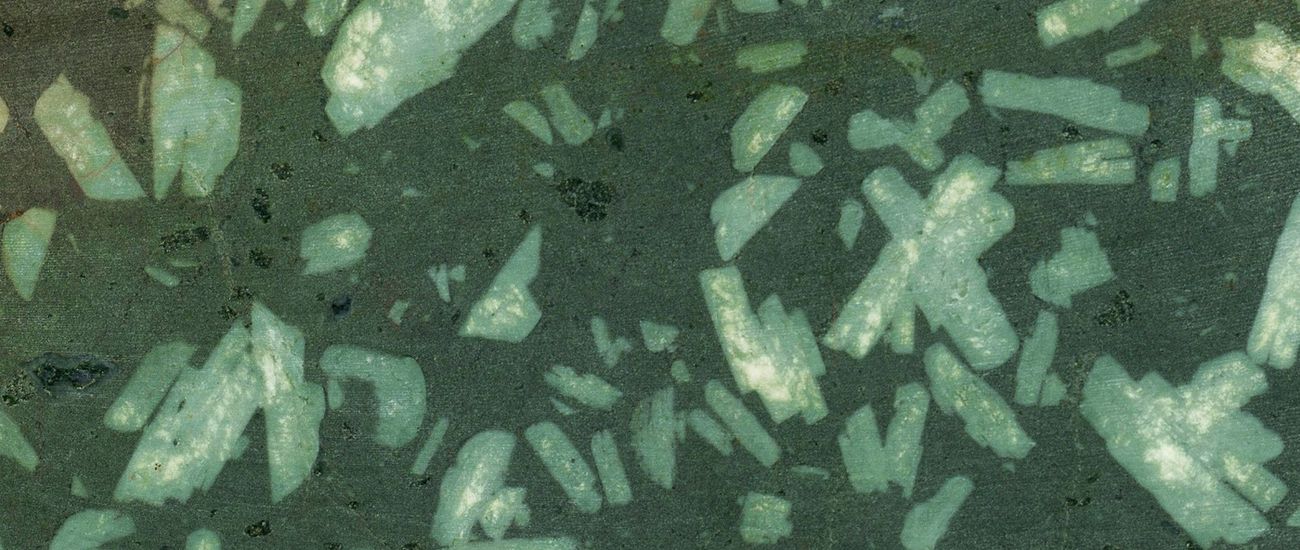
Green+White
Scientific Classification
Diabase Porphyry
Commercial Classification
Granite
Quarry Site
Sparta-Greece
Quarry State
Inactive
Geological Origin and Nomenclature
Greek Green Porphyry, extracted from ancient quarries located on Mount Taygetus in the Laconia Sparta, Greece, is classified as ‘Diabase Porphyry.’ This hard igneous rock is distinguished by a dark green groundmass interspersed with lighter colored green feldspar crystals. During the Roman Empire, it was known as ‘Marmor Lacedaemonium,’ while Italian stonemasons referred to it as ‘Porfido Verde Serpentino’ due to its resemblance to snake skin.
Use in Roman and Ottoman Periods
The use of green porphyry began in the Middle Minoan III period and continued through the Roman Empire, where it was employed in pavements, wall crustae, small capitals, columns, and statuary. Its significance extended to the Byzantine period, highlighting it appeal and versatility in both structural and decorative applications. In later periods, it was frequently reused in decorative works across Europe, demonstrating its lasting influence in art and architecture.*
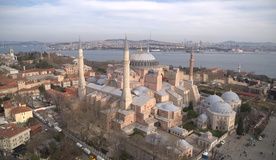
In Istanbul, Greek Green Porphyry was prominently used in the interior of Hagia Sophia, where it adorned the walls with opus sectile decorations and was featured as disks in the Omphalion.
*Lazzarini, Loreonzo. Three Important Coloured Stones of Ancıent Greece: History of Use, Distribution, Quarries, Archaeometry, Deterıioratıon. Laboratorio di Analisi dei Materiali Antichi, Università IUAV di Venezia, S. Polo 2468, 30125 Venezia (Italia). Accessed 6 September 2024 at http://www.library.tee.gr/digital/m2616/m2616_lazzarini.pdf
Historical Buildings
Buildings using this stone
Item 1 of 1