Item 1 of 1
Properties
Properties of the Stone
Additional Names
Rosso di Levanto
Color
Bordeaux
Scientific Classification
Serpentine Breccia
Commercial Classification
Marble
Quarry Site
Liguria-Italy
Quarry State
Active
Historical and Geological Origin
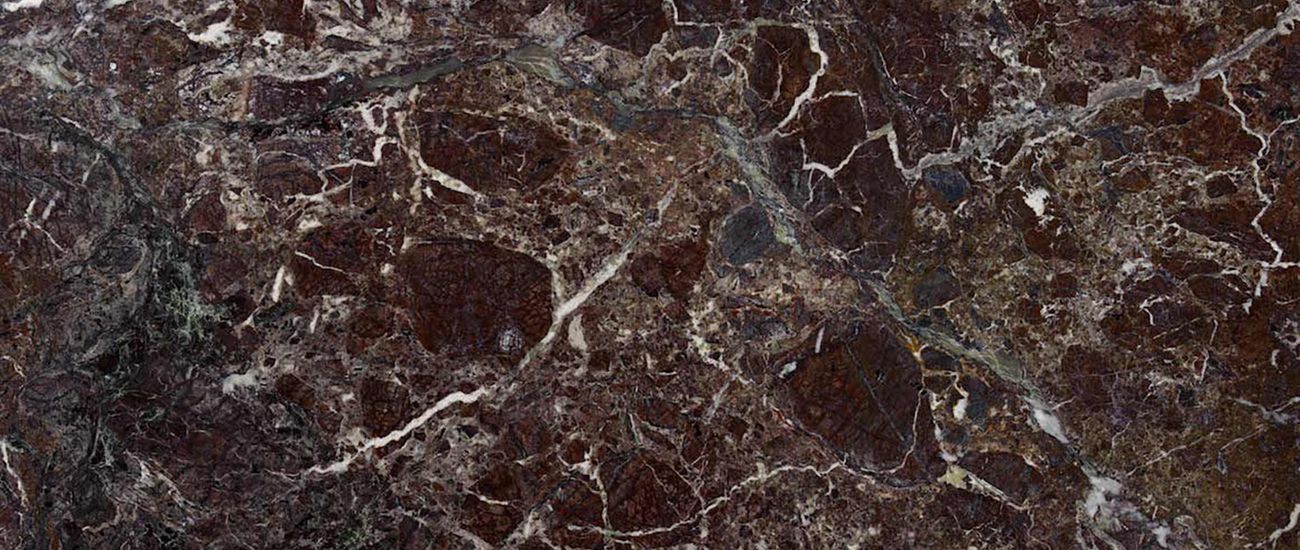
Levantonian Marble, originating from the Liguria region of Italy, has a rich history that dates back to the Etruscans and Romans. Classified as ‘Serpentine Breccia/Ophicalcite,’ it features a distinctive red bottom coloration due to hematite (iron), with white calcite veins, occasional green serpentine areas, and rare quartz clusters. Its chromatic appearance, combined with its polishability and durability has made it highly esteemed over the centuries. The Italian stone masons referred to this stone as ‘Rosso di Levanto.’
Historical Use and Current Production Status
This stone was widely used between the 17th and 19th centuries and continues to be produced today, though in limited quantities. A similar marble is found in Alacakaya, Elazığ, Türkiye, known as ‘Elazığ Cherry.’
Areas of Architectural Application
Levantonian Marble is versatile and suitable for both interior and exterior applications. It is commonly used in exterior projects such as façade cladding, pool and wall capping, and landscape design. In interior settings, it is often employed for flooring, wall cladding, countertops, stair treads, mosaics, and fountains.
Levantonian Marble in Ottoman Architecture
In the Ottoman Empire, this natural stone was utilized as tile-shaped cladding on the exterior walls of the Revan Pavilion in Topkapı Palace, frequently paired with its green-colored variety. During the 18th and 19th centuries, it was notably used for the tops of decorative tables and stands found in palace buildings.