Item 1 of 1
Properties
Properties of the Stone
Additional Names
Rosso di Verona, Rosso Ammonitico
Color
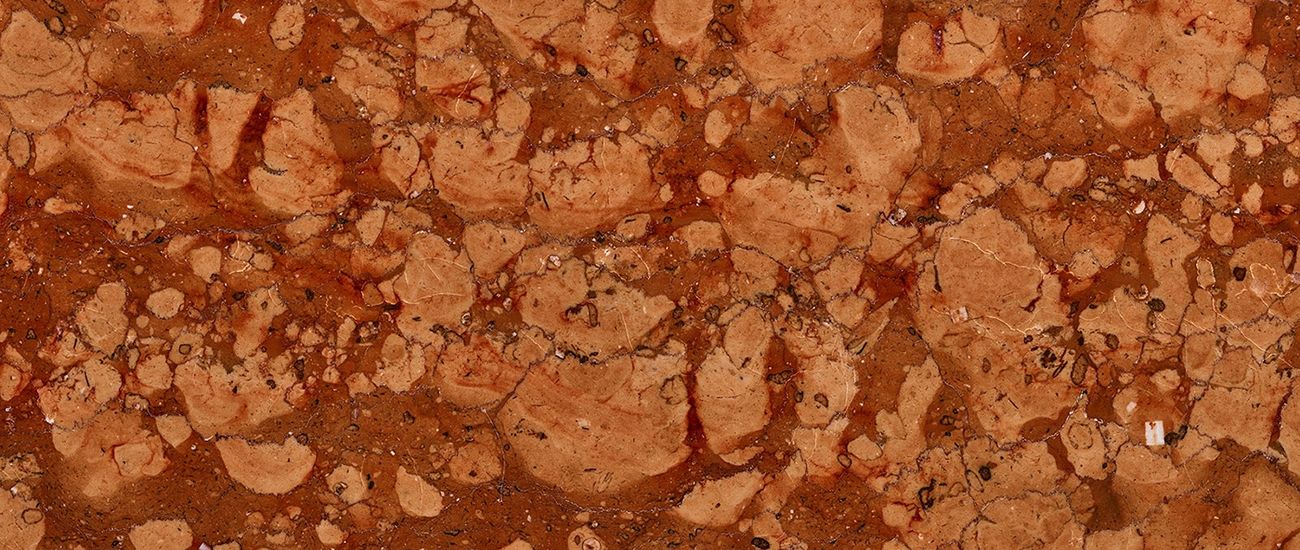
Red
Scientific Classification
Fossiliferous Limestone
Commercial Classification
Marble
Quarry Site
Verona-Italy
Quarry State
Active
Geological Origin and Nomenclature
Verona Marble, first quarried in the city of Verona, Italy, in the Late Roman era, is classified as ‘Fossiliferous Limestone.’ This stone contains characteristic ammonite fossils from the Jurassic geological period and exhibits a color range from cream and beige to red with orange nodules, with the red variant being the most highly prized.* Italian stonemasons named this stone ‘Rosso di Verona.’
Useage Areas and Cultural Heritage
There are many examples of this stone being used in historical buildings in Verona and the surrounding regions. It can be seen prominently, for example, in St. Mark's Cathedral. It has been preferred for columns, statues, flooring, wall cladding, countertops, and other architectural details.
Today, Verona Marble is still used in various architectural projects.
It was chosen for use in the base of the Republic Monument in Taksim, Istanbul, to commemorate the formation of the Turkish Republic in 1923.
*Electrum, ‘The Legacy of Verona Marble’. Accessed 27 August 2024, at https://www.electrummagazine.com/2012/03/the-legacy-of-verona-marble/
_276x160.jpg)
_276x160.jpg)