_1400x600.jpg)
_1400x600.jpeg)
_1400x600.jpeg)
_1400x600.jpg)
Item 1 of 4
Properties
Properties of the Building
Construction Date
390
Construction of the Hippodrome was started at the end of the 2nd century and was completed during Emperor Constantine's reign in the 4th century, modeled after the Circus Maximus in Rome. Later in the 4th century, during the reign of Theodosius I, an obelisk was erected in the Hippodrome as a victory monument, known today as the ‘Dikilitaş’ (Obelisk).
History
The Obelisk, erected by Pharaoh Thutmose III in the 15th century BC to commemorate the 30th anniversary of his reign in Upper Egypt at the Amun-Ra Temple, was brought to the Hippodrome in the late 4th century.
Structural Features
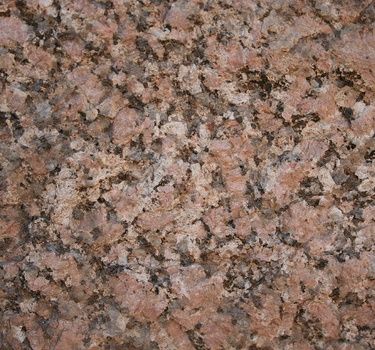
Made of granite, the obelisk features hieroglyphic inscriptions on all four sides and a pyramid-shaped top. The obelisk weighs 200 tons. While it is unclear how long it took to transport it from Egypt, it was erected on the Hippodrome’s central axis, or spina, under the management of the city’s governor, Proculus, in 32 days. Standing 19.6 meters tall, the obelisk is positioned in the center of the arena on a two-stepped base measuring 7.05 by 7.10 meters. It rests on two marble blocks of different sizes, both adorned with relief carvings.
Reliefs
At the top of the stone, carved in the shape of a pyramid, Pharaoh Thutmose III and the Egyptian god Amun-Ra are depicted hand-in-hand within a rectangular frame. The reliefs on the marble depict Theodosius I, his family, and members of the court. On the north side, low-relief carvings show Arcadius and his wife seated in the Emperor’s box, known as the kathisma, within the Hippodrome, with a palace official beside them, possibly Gainas, the leader of the Goths. On the south side, Theodosius I is depicted watching a chariot race, with his two sons to his right and Valentinian II to his left. To the east, Theodosius is shown distributing wages to soldiers or watching a game with his two sons. In his hand, he holds a wreath to bestow on the winner, while musicians play a Pan flute made of seven reeds. On the west side, he is seated on his throne, with the Empress to his left and his sons, Arcadius and Honorius, to his right.
Inscriptions
On both sides of the lower block, there are Greek and Latin inscriptions, and on the other side, reliefs depicting the raising of the obelisk and games in the Hippodrome. One of the Greek inscriptions states, ‘This column, which had fallen, was erected again with the help of the city's governor, Proclus.’ The Latin inscription, written at the base of the stone, states, ‘Initially I resisted, but bowed to the command of my great lord Theodosius and was compelled to raise it in 30 days under Proclus’ administration.’
The Ottoman Period
During the construction of the Sultan Ahmed Mosque in the 17th century, earth excavated from the mosque's foundations was dumped into the Hippodrome, raising the ground level burying the marble blocks beneath the obelisk. In April 1857, British researcher C. T. Newton conducted excavations around the base, uncovering the lowest level. Today, the obelisk’s base stands within a square pit enclosed by iron railings.
References
Eyice, Semavi. (1994). 'Dikilitaş', Dünden Bugüne İstanbul Ansiklopedisi, Vol. 3, A joint publication of the Ministry of Culture and the Tarih Vakfı Yayınları, İstanbul, pp. 51–52.
Müller-Wiener, Wolfgang. (2001). İstanbul’un Tarihi Topografyası 17. Yüzyıl Başlarına Kadar Byzantion-Konstantinopolis İstanbul, Translated by Ülker Sayın, Yapı Kredi Yayınları, pp. 65–66.
Yücel, Erdem. (1966). 'Dikilitaş', İstanbul Ansiklopedisi, Vol. 8, Koçu Yayınları, İstanbul, pp. 4551–4555.
Natural Stones
Stones used in this building