%20kopyas%C4%B1_1400x600.jpg)
_1400x600.jpg)
_1400x600.jpg)
_1400x600.jpg)
Item 1 of 7
Properties
Properties of the Building
Architect(s)
Mimar Sinan
Construction Start
1543
Construction Completion
1548
The Şehzade Mosque, designed by Mimar Sinan, was commissioned by Sultan Suleiman the Magnificent after the death of Şehzade Mehmed, his eldest son with Hürrem Sultan. Peçevî noted down when the foundation works of the mosque originally intended for Sultan Suleiman was nearly finished, he commissioned the construction of his son's tomb and the mosque to honor him.
Construction Date
Official records indicate that construction began on 14 June 1543, and was completed by 14 September 1548.
Architectural Features
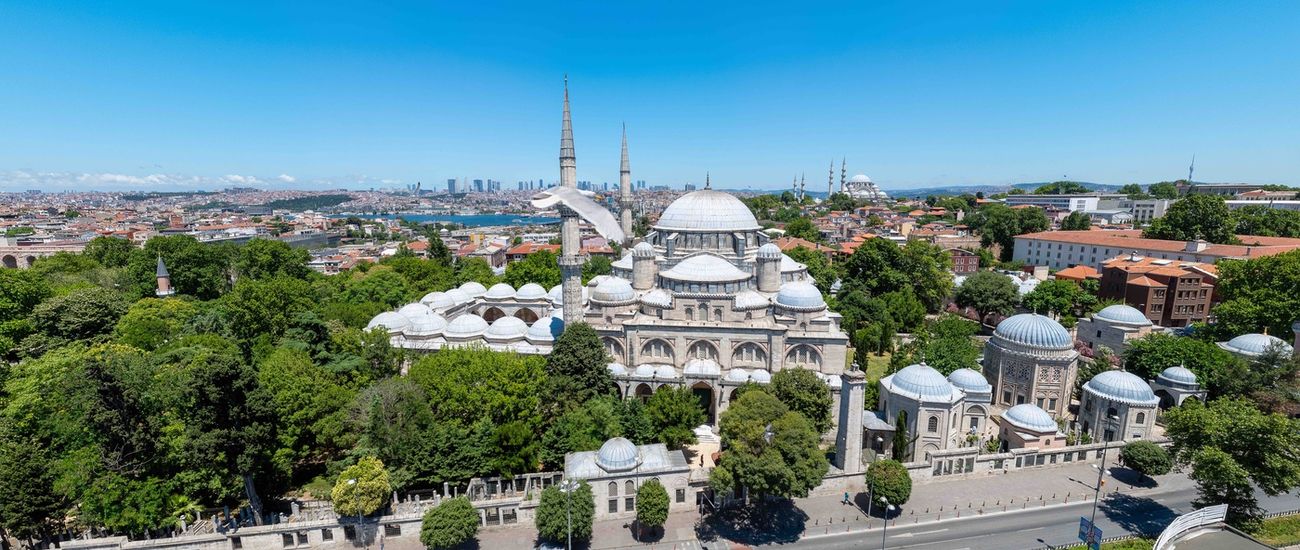
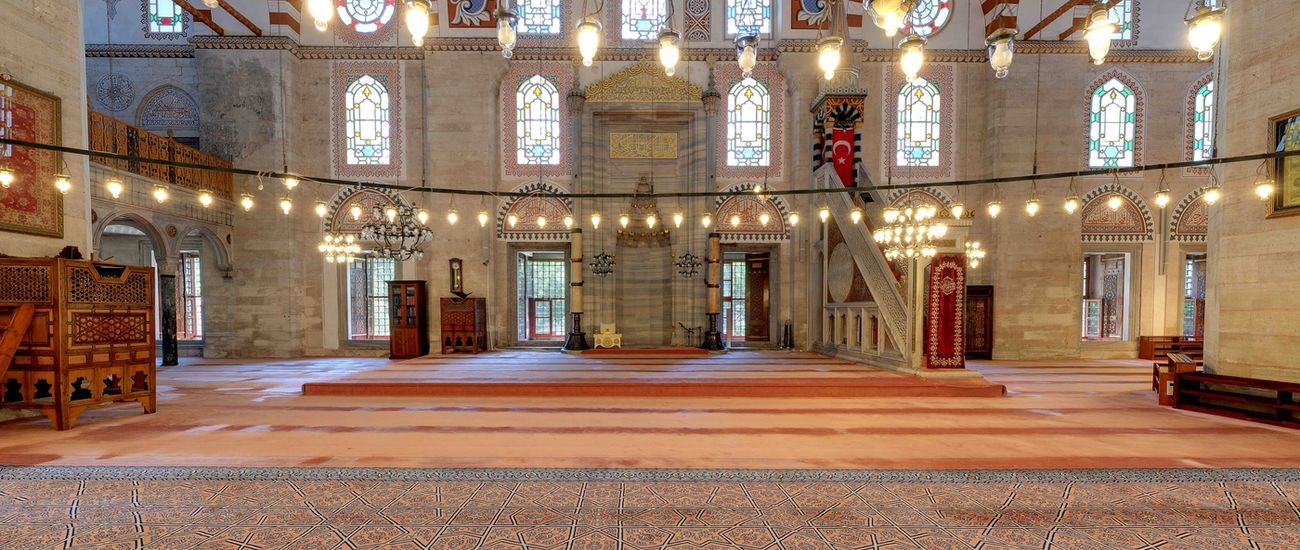
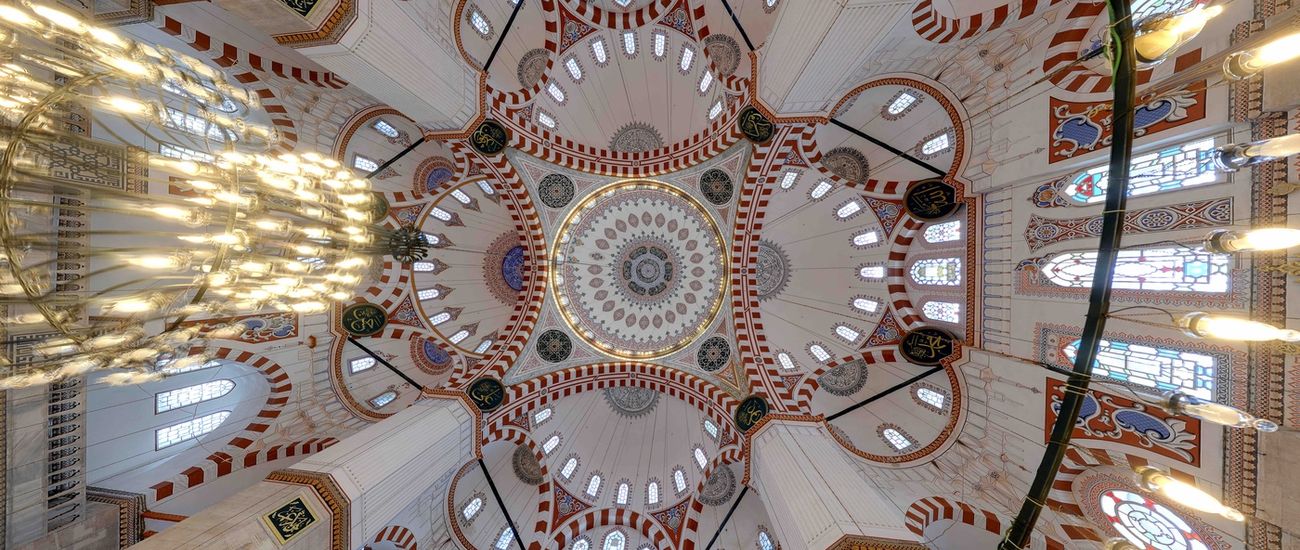
The dome of this mosque, which Mimar Sinan called his 'apprentice work,' is slightly smaller than that of the Süleymaniye Mosque. The dome, with a span of 19 meters and a height of 37 meters at the keystone, is supported by four hexagonal pillars and is flanked by semi-domes on all four sides. For the first time, Mimar Sinan emphasized the centrality of the plan by incorporating two side entrances through the middle of the porticos. By removing the walls from being primary structural elements and incorporating numerous windows, he achieved a softer appearance compared to the solid architectural experiments of his predecessors.
Minarets
On either side of the mosque stand two elegantly crafted minarets, each with two balconies (şerefe). Evliya Çelebi writes each minaret has an 18-sided shaft adorned with intricate inscriptions, ornaments, and mukarnas motifs in layered bands from top to bottom.
Courtyard Arcades
One of the key features of the Şehzade Mosque is its courtyard colonnade, which consists of 12 columns and 16 domes, with each side maintaining the same cornice height.
Pool
Evliya Çelebi describes the arcade’s Havernak arches, adorned with colourful stones and a round pool in the center of the courtyard filled with fresh water.
Fountain
Sultan Murad IV later added a fountain (şadırvan) with eight columns, following his Baghdad campaign.
Mosque Complex
The tomb of Şehzade Mehmed, completed in 1544, was the first structure built within the mosque’s complex (külliye). The madrasa was finished in 1547. Other structures within the complex include a guesthouse (tabhane), a soup kitchen (imaret), and a primary school (sıbyan mektebi).
References
Ayvansarâyî Hüseyîn Efendi, Alî Sâtı Efendi ve Süleyman Besîm Efendi. (2001). Hadîkatü’l-Cevâmi, İstanbul Câmileri ve Diğer Dinî-Sivil Mi'marî Yapılar, Ed. Ahmed Nezih Galitekin, İşaret Yayınları, İstanbul, pp. 54-56.
Kahraman, Seyid Ali ve Dağlı, Yücel. (2003). Günümüz Türkçesiyle Evliya Çelebi Seyahatnâmesi, Vol. 1, Book 1, YKY, İstanbul, pp. 121-123.
Kuban, Doğan. (2007). Osmanlı Mimarisi. Yem Yayınları, İstanbul, pp. 270-276.
Orman, İsmail. (2010). ‘Şehzade Külliyesi', DİA, C. 38, İstanbul, pp. 483-485.
Öz, Tahsin. (2015). İstanbul Camileri, Türk Tarih Kurumu, Ankara, pp. 137-138.
Peçevi İbrahim Efendi. (1981), Peçevi Tarihi, Ed. B.S. Baykal, Vol. 2, Ankara.