Item 1 of 1
Properties
Properties of the Stone
Additional Names
Marmor Chium, Portasanta
Color
Brown+Grey
Scientific Classification
Limestone
Commercial Classification
Marble
Quarry Site
Chios Island-Greece
Quarry State
Inactive
The Origin of Chios Island Marble
Chios Island Marble was quarried by the ancient Greeks and intensively mined by the Romans from the first century BC onwards.
Geological Characteristics and Aesthetic Qualities
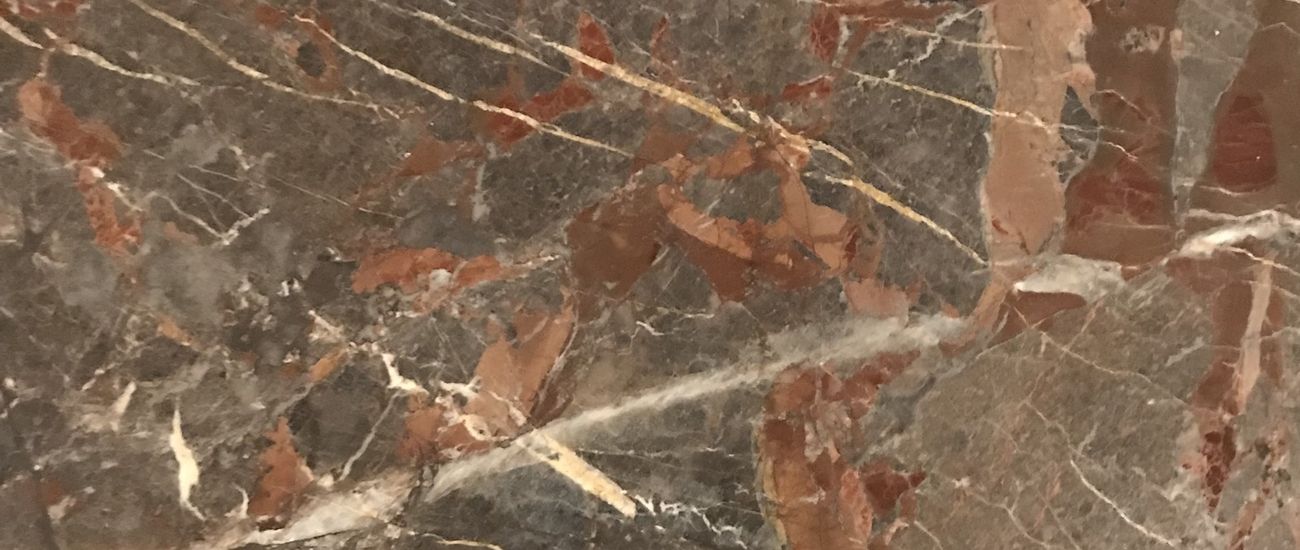
Classified as ‘Brecciated Limestone,’ Chios Island Marble is renowned for its distinctive pattern and compact texture. It features a unique blend of pink, dark red, and grey tones, with white calcite-filled fractures. Zigzagging lines of red, pink, and orange, caused by iron deposits, add to the marble’s striking appearance that made it prized for both architectural and decorative purposes. The Romans called it ‘Marmor Chium’ and later, Italian stonemasons also referred to as ‘Portasanta.’
Areas of Use and Cultural Heritage
Chios Island Marble was one of the most desirable and expensive marbles in the ancient world. It was highly favored for columns, sculptures, floor tiles, and various other architectural details. Artifacts from the ancient period and collections in some museums can still be found that showcase its use. It was used, for example, in the Temple of Artemis in Ephesus. In Rome, it adorns the fountain basins in the Piazza Navona, formerly known as the Circus Agonalis, and the Holy Door jambs at St. Peter’s Basilica in Vatican City.*
*University of Oxford Museum of Natural History, ‘More about Portasanta.’ Accessed on 4 September 2024,at http://www.oum.ox.ac.uk/corsi/files/pdf/Portasanta.pdf
_276x160.jpg)
_276x160.jpg)

_276x160.jpg)
_276x160.jpg)
_276x160.jpg)