_1400x600.jpg)
_1400x600.jpg)
_1400x600.jpg)
_1400x600.jpg)
_1400x600.jpg)
_1400x600.jpg)
_1400x600.jpg)
Item 1 of 7
Properties
Properties of the Building
Original Structure
Theotokos Kyriotissa Church
Architect(s)
Unknown
Construction Date
Likely 11th Century
Repurposing
Converted into a mosque after the conquest of İstanbul.
The church structure, which was converted after the conquest of İstanbul and named Kalenderhane Mosque, is located at the corner where the Bozdoğan Aqueduct meets 16 Mart Street. It is an endowment of Mehmet the Conqueror.
The Period of Sultan Mehmet the Conqueror
After the conquest, in recognition of their contributions during the siege, the building was allocated as a lodge for the dervishes of the Kalenderi order. The monk cells, whose location is unknown, served as a dervish lodge (zawiya) in the 15th century, while the sanctuary was used as a place for spiritual gatherings and rituals (tevhidhane-semahane). Consequently, Kalenderhane is considered the oldest Mevlevi lodge (Mevlevihane) in İstanbul. Archival documents reveal that Fatih Sultan Mehmed built a madrasa next to Kalenderhane Mosque, and that Müeyyedzade Mustafa Efendi served as a teacher (müderris) there during the reign of Sultan Bayezid II.
16th Century Repairs
In the 16th century, Darüssaade Ağa Maktul Beşir Ağa had the mosque repaired and built a madrasa next to it. Arpa Emini Mustafa Efendi also had a school constructed in front of the mosque's main gate.
History of the Church
The structure was initially believed to be the Church of Diakonissa, but research conducted in 1935 revealed that it may actually have been the church of the Akataleptos Monastery. During the research, a mosaic panel from the pre-Iconoclast period was found on the apse wall, making it the only one of its kind in İstanbul. The building features arches and a divided entrance are thought to date from the Justinian period. It is likely that a new centrally planned church was constructed on top of an earlier structure from the 8th century, with the apse of the new church covering both the apse and the mosaic of the old one. Additionally, in one of the side cells, two frescoes of the Virgin Mary were found, both bearing the title ‘Kyriotissa.’ This suggests that, although the church belonged to the Akataleptos Monastery, it was likely dedicated to the Virgin Mary.
The Komnenos Period
The building that now serves as Kalenderhane Mosque was likely constructed during the Komnenos period (11th-12th centuries) and incorporates elements from earlier structures. The prothesis and diakonikon spaces typically found on either side of the apse in Byzantine churches, were not consistently implemented. Instead, a series of chapels with mixed plans were employed.
Architectural Features
Iconostasis and Gallery Floor
The building had a decorative wall, or iconostasis, that separated the altar (bema) section from the nave, rising to the gallery floor. Today, the side openings of this large icon-bearing screen wall, with its partially damaged decorations, stand on the eastern pillars of the mosque.
Closed Greek Cross Shape
In the main space, the corner wall design follows the closed Greek cross shape, a characteristic feature of Byzantine religious architecture, which gives the building an imposing appearance.
The four arms of the cross are covered with barrel vaults, and at the centre, there is a dome with a windowed drum. The southern arm of the cross opens to the exterior through a triplet arch supported by two columns. Unfortunately, the apse projection on the eastern side of the building has not survived. Additionally, on either side of the eastern arm of the cross and the apse, there are side spaces referred to as pastophorion in Byzantine architecture.
Side Spaces and Modifications
Significant changes have been made in these small spaces with highly irregular layouts, a result of the building’s use for both religious and social purposes over many centuries, to accommodate various needs. Kalenderhane Mosque stands an important structure that reflects İstanbul’s layered cultural heritage, showcasing both Byzantine-era ruins and artworks, as well as its function and additional structures from the Ottoman period.
References
Ayvansarâyî, Hüseyîn Efendi, Alî Sâtı Efendi, and Süleyman Besîm Efendi. (2001). Hadîkatü’l-Cevâmi: İstanbul Câmileri ve Diğer Dinî-Sivil Mi'marî Yapılar, Edited by A. N. Galitekin, İşaret Yayınları, p. 228.
Eyice, Semavi. (2001). 'Kalenderhane Camii', DİA, Vol. 24, pp. 251–254.
Göyünç, Nejat. (1984). 'Kalenderhane Camii', İstanbul Üniversitesi Edebiyat Fakültesi Tarih Dergisi, no. 34, pp. 485-494.
Kuban, Doğan. (1994). 'Kalenderhane Camii', Dünden Bugüne İstanbul Ansiklopedisi, Vol. 4, A Joint Publication of the Ministry of Culture and the History Foundation, İstanbul, pp. 396-398.
Kuban, Doğan. (2007). Osmanlı Mimarisi, YEM Yayınları, pp. 76, 219.
Natural Stones
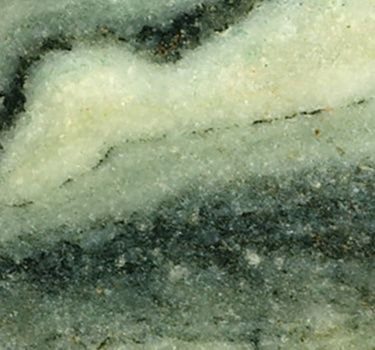
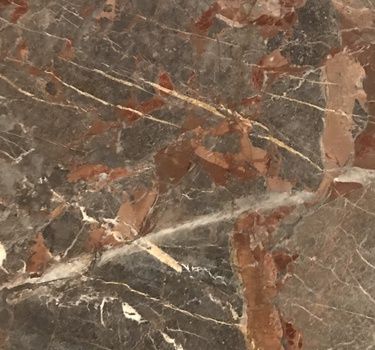
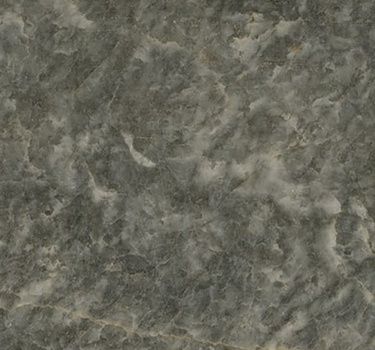
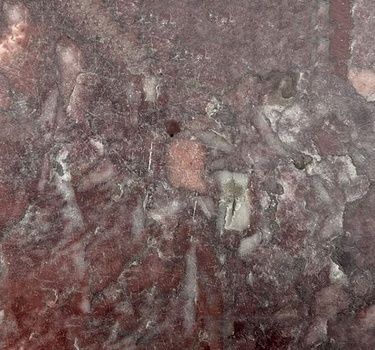
Stones used in this building