Item 1 of 1
Properties
Properties of the Stone
Additional Names
Marmor Triponticum, Occhio di Pavone
Color
Orange+Beige
Scientific Classification
Fossiliferous Limestone
Commercial Classification
Marble
Quarry Site
Kocaeli-Türkiye
Quarry State
Inactive
Quarry Site
Kutluca Rudist Limestone, quarried from the Roman period until the late 20th century near the village of Kutluca in the Körfez district of Kocaeli, is a notable example of ‘Fossiliferous Limestone.’ A similar type of natural stone is also known as ‘Gebze Stone’ because it was also extracted from the quarries in Tavşanlı village of Gebze district in the past.
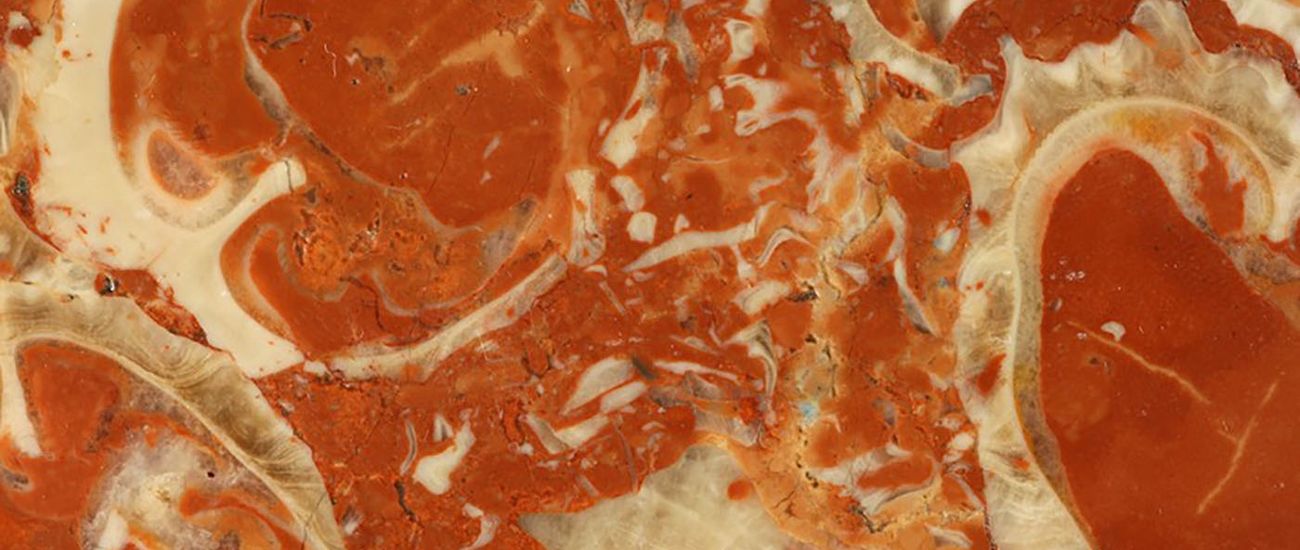
This limestone is distinguished by the presence of rudist fossils, which are visible as horn and ring-shaped structures within the rock. Its natural cement is carbonate-based, and the coloration ranges from light beige to brown, influenced by the varying content of hematite (iron).
Nomenclature
During the Roman Empire, Kutluca Rudist Limestone was called ‘Marmor Triponticum,’ and Italian stone masons named it ‘Occhio di Pavone’ because its texture resembled the leaves of a plant.
Usage Areas
Kutluca Rudist Limestone was used in both the indoor and outdoor, particularly for arch and border stones, flooring, inscription surrounds, columns, and door and window jambs. In Istanbul, it was frequently used in the floors and columns of monumental buildings.
_276x160.jpg)
_276x160.jpg)
_276x160.jpg)
_276x160.jpg)
_276x160.jpg)
_276x160.jpg)
_276x160.jpg)
_276x160.jpg)
_276x160.jpg)
_276x160.jpg)