A joint restoration protocol for the Ani Bridge has been signed
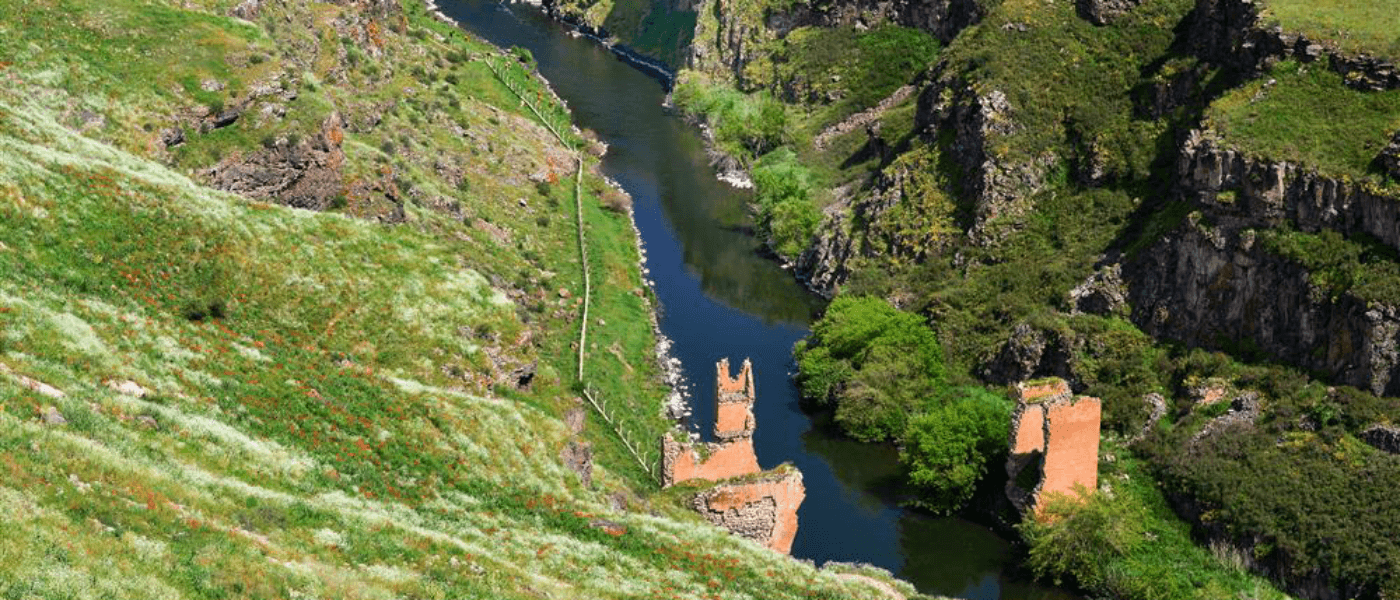
Cover photo: website of the Kars Provincial Directorate of Culture and Tourism
Turkey and Armenia took a significant step in the normalisation process by signing an agreement in Yerevan on 4 May for the joint restoration of the Ani Bridge.
The significance of the restoration project
The restoration project is expected to create a new area of cooperation between the two countries as part of confidence-building measures. The collaboration between technical delegations from Turkey and Armenia throughout the process is also considered significant for the development of institutional communication between the parties.
The Ani Bridge is historically known as one of the region’s most important crossing points. Situated on the Silk Road, one of the historic trade routes, the bridge is regarded as a key component of the cultural heritage surrounding the Ani Ruins. It is anticipated that, once the restoration is complete, the structure will contribute both to regional tourism and to cultural cooperation between Turkey and Armenia.
The restoration of the bridge also holds symbolic significance in terms of preserving the shared historical heritage located along the border. For this reason, the project is regarded as important for strengthening ties between the two countries through cultural heritage. A joint working group had previously been established between Turkey and Armenia to prepare for the restoration process. The first meeting of this working group, aimed at accelerating restoration preparations and identifying any technical requirements that may arise during the process, was held in Istanbul on 9 April 2025. It was noted that the meeting addressed the technical aspects of the restoration process, joint working procedures, and how the parties would respond to on-site requirements. At the sixth meeting, held in Yerevan in September 2025, the parties reached an agreement on the joint restoration of the Ani Bridge, also known as the Silk Road Bridge, located within the historic Ani Ruins.
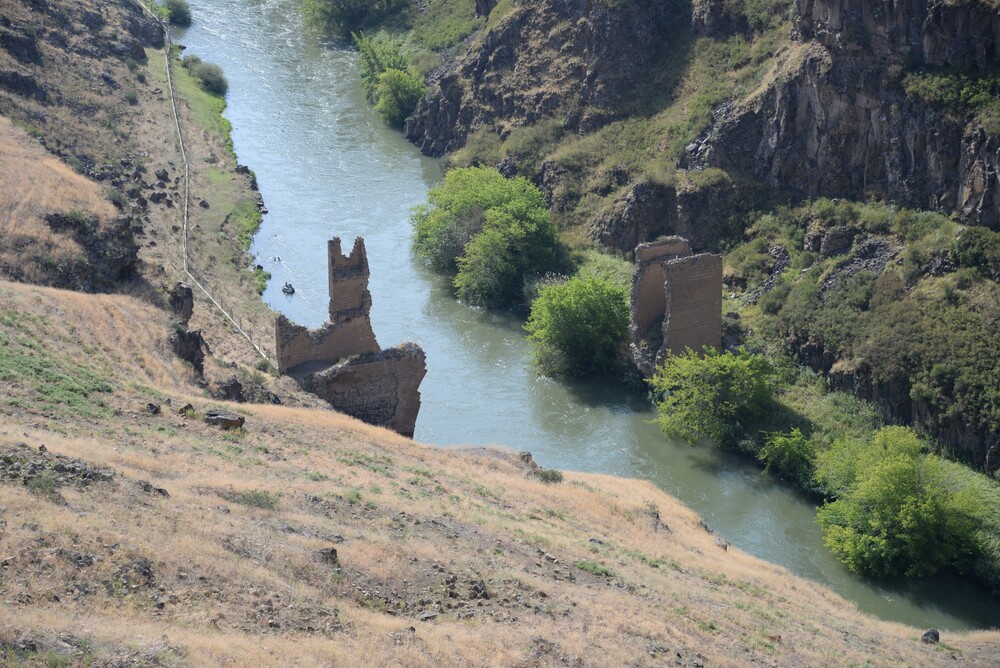
Photo and its source: Archaeological Site of Ani: Silk Road Bridge © Fahriye Bayram, 2014, Nomination File (whc.unesco.org/en/list/1518/gallery)
Ani Bridge
Also known as the Ocaklı or Silk Road Bridge, the Ani Bridge spans the Arpaçay River, which forms the border between Turkey and Armenia. One side of the bridge is situated near the village of Ocaklı in Kars, Turkey, whilst the other lies close to the village of Haykadzor in Armenia. Given its location, the bridge serves as a natural border between the two countries.
Believed to have been built by the Bagratids in the 11th century, the bridge is situated within the Ani Ruins. Having been largely destroyed over the centuries by wars and earthquakes, only the bridge piers remain today. The Ani Bridge region, which was added to the UNESCO World Heritage List in 2016, holds great historical and cultural significance.
The historical background and current condition of the bridge, as outlined in the inventory report prepared by the Bridge Conservation Board:
The historic Ani (arched) bridge, situated within the boundaries of a first-degree archaeological site, was constructed on the Arpaçay River in a north-south direction to the east of the Ani archaeological site. Historical sources indicate that the bridge was built in the 10th century AD as part of the Silk Road route and was in use until the early 18th century; however, it was destroyed by the Russians during the 1807 Russo-Turkish War to block access. With its deck completely destroyed, only the bridge’s piers, which rest on both banks of the Arpaçay, and the walls rising from these piers have survived to the present day, albeit partially. Judging by the partially intact stone arch blocks, the arch is circular in form, i.e. single-centred, and was built using the bond technique with four courses of stone; it is understood that the piers on both banks of the Arpaçay are connected by this arch, forming a single-span bridge. The bridge’s abutment walls are built using the key-course technique with smooth-cut tuff stones of a yellowish hue, with the gaps filled with rubble fill. Clay and lime mortar were used as binding materials within the rubble fill, which consists of basalt and tuff stones. It has been observed that the majority of the facing stones on the abutment walls have broken away from the wall surface, exposing the rubble fill within. As the upper parts of the piers were covered with earth fill and wild vegetation, no findings regarding the original paving material could be identified.
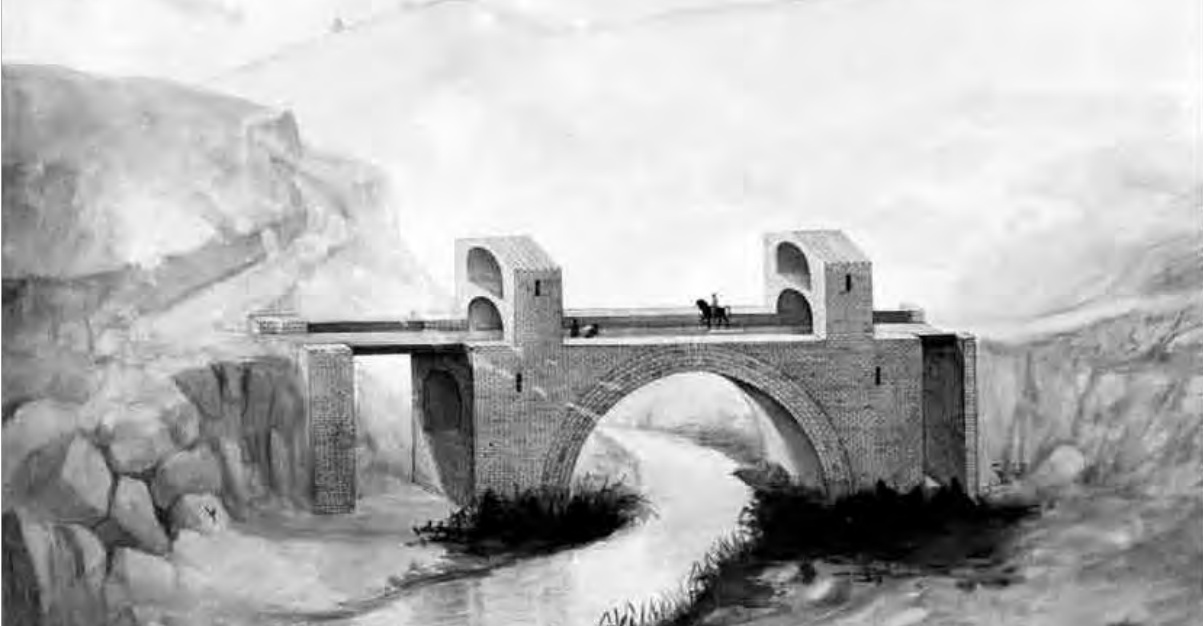
Visual: Reconstruction of the Bridge (Karapetian, 2011) from Ani Cultural Landscape World Heritage Nomination File @ whc.unesco.org
On the origins of the stones of the Ani Bridge…
The primary building material forming the architectural fabric of the Ani Ruins (Ani Archaeological Site) is volcanic tuff, which is consistent with the region’s geological structure.
The structures at Ani were constructed using tuff stones of varying colours and textures for aesthetic and durability purposes. The lithological characteristics of these stones, such as colour and physical properties, are as follows: In the walls and buildings, tuff stones of camel-hair (yellowish-grey), red and black colours were predominantly favoured. These stones are of volcanic origin; they are lightweight and easy to work with, yet they harden upon contact with air, gaining durability. The stone blocks are generally bonded together using Horasan mortar (a mixture of volcanic stone fragments, sand and lime).
The stones used in the construction of Ani were sourced from the Bostanlar Stream and the Arpaçay Valley in the immediate vicinity of the city (the deep valleys surrounding the city and the volcanic strata on the plateau served as natural quarries) and the Magasberd (Magasberd) area (some sources indicate that high-quality stones, particularly those used for large monumental structures, were brought from historical quarries located on the opposite bank of the Arpaçay, in the region now within the borders of modern-day Armenia).
The historic Ani Bridge (Silk Road Bridge) spanning the Arpaçay River was also constructed using neatly cut tuff stones, as was typical throughout the city. For the external cladding of the bridge piers, the yellowish and reddish volcanic tuff stones seen in significant structures such as the cathedral and palace in Ani were favoured. The interior sections of the bridge’s load-bearing piers were constructed using rubble stone and dense mortar (likely Horasan mortar) as fill to enhance durability; the exterior surfaces, however, were clad with finely cut blocks that provide both aesthetic appeal and protection. As the bridge is situated at one of the narrowest and steepest points of the Arpaçay valley, it is assumed that the stones used in this structure were also sourced from local volcanic formations on both sides of the valley (the Turkish and Armenian sides) and from quarries immediately adjacent to the town.
Basalt is present in Ani, but its application and geological location differ from those of tuff. The Ani archaeological site is built upon a massive basalt layer (basalt block) approximately 30 metres thick. In other words, the plateau upon which the city stands is naturally of basalt origin. Although coloured tuff stones, which are easier to work with, dominate the visible, aesthetic parts of the buildings and the bridge, basalt was used particularly in defensive structures and foundations:
The Structural Use of Basalt in Ani: Black basalt blocks are found in the Northern Walls (in the early-period defensive walls and the lower sections of some towers), in the Zoroastrian Fire Temple (the columns of the Fire Temple in Ani are made of a very hard, black basalt stone, unlike the rest of the city), and in the Inner Citadel (it is known that some of the towers on the Inner Citadel walls were constructed using black basalt blocks salvaged from other structures.)
The bridge’s piers in the river and the lower sections that come into direct contact with the water are generally reinforced with basalt or hard stones of a basaltic nature, as these are far more resistant to erosion. In the upper sections and cladding, however, tuff stones that blend in with the city’s character take centre stage.
In summary, whilst tuff stone forms the city’s ‘aesthetic and architectural’ face, basalt represents its ‘natural foundation and defensive strength’.
References:
CNN News website
Kars İl Kültür ve Turizm Müdürlüğü websitesi
E.N. Saltık, 2011. Arkeolojik Alanlardaki Anıt Yapıtaşlarının Taş Ocaklarının Araştırılması, ODTÜ Journal
Özlü, T.-Kaleli, C. 2019, “Kültürel Miras Turizmi Açısından Bir Değerlendirme: Ani Ören Yeri”, Amisos, 4/7, 195-218.
UNESCO World Heritage Centre Ani Cultural Landscape World Heritage Nomination File, whc.unesco.org
Oktay Belli & Şahabettin Öztürk, 2015. Historic City Of Ani, Republic of Turkey Ministry of Culture and Tourism Directorate General of Libraries and Publications
Türkiye Kültür Varlıkları ve Müzeler Genel Müdürlüğü - Avrupa Konseyi Doğal ve Kültürel Varlıkları Koruma Envanteri
Çiğdem Meriç Cevahir, 2019. "Tarihi Taş Köprülerin Yapım Teknikleri. Basılmamış Yüksek Lisans Tezi. Uludağ Üniversitesi FBE
N. Mağaralı, "Ani’de 2002 Yılında Ortaya Çıkarılan Yapı ve İçinde Bulunan Define".
2 Özlü, T.-Kaleli, C., 2019. “Kültürel Miras Turizmi Açısından Bir Değerlendirme: Ani Ören Yeri”, Amisos, 4/7, 195-218.
Ani Taş Ocakları (virtualani.org/quarry)
Recent News
Street unearthed in Aspendos
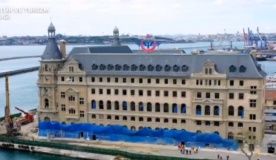
Restoration of Haydarpaşa Station continues
#Haydarpaşa Train Station #Lefke Stone (sandstone) #Hereke Granite
Stoneline Publications’ third book: SELİMİYE
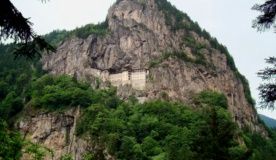
Sümela Monastery reopened to visitors

International Mustafa V. Koç Underwater Archaeology Symposium
#Prokonnesos quarry #Verde Antico #Marmor Docimium, Pavonazzetto, Afyon Violet
The Granikos Battlefield has been placed under protection
#Marmara marble #Prokonnesos marble #Granikos Battle
The Second Edition of Mimarlar İçin Doğal Taş Rehberi and the English Edition, Natural Stone Guide for Architects, Have Been Published
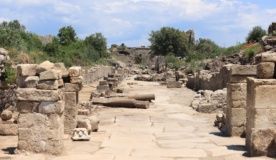
One of the main streets of Ancient Side has been unearthed
#conglomerate #Side Ancient City #Feriştah Alanyalı
The historic Yalı Pavilion is to be reconstructed
The theme of the Edirne Biennial: Bridges