International Mustafa V. Koç Underwater Archaeology Symposium
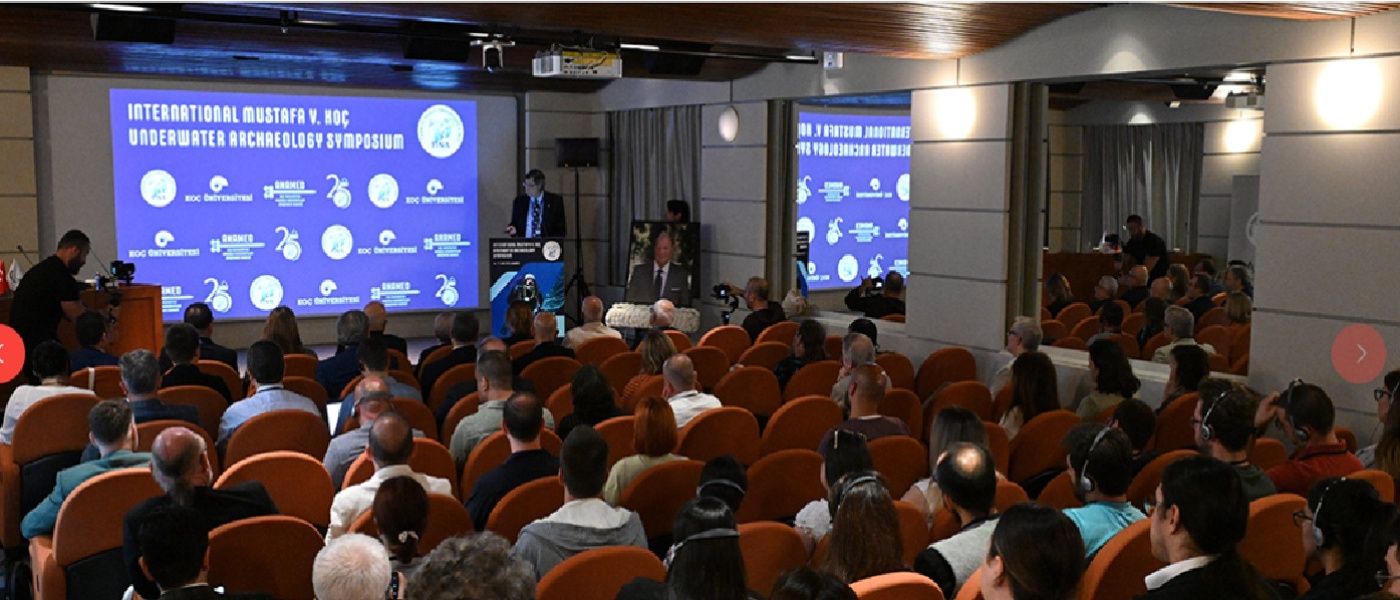
The TINA, the Turkish Foundation for Underwater Archaeology, which aims to raise awareness in the fields of underwater archaeology and maritime culture, to protect the archaeological treasures along the Anatolian coastline and share them with the public, support research and encourage conservation efforts, hosted the International Mustafa V. Koç Underwater Archaeology Symposium. The event brings together the world’s leading academics in this field in Istanbul.
The symposium organised by Koç University’s Centre for the Study of Anatolian Civilisations (ANAMED) began on 18 June with an opening address by Prof. Dr Ufuk Kocabaş, and continued with research presentations by academics from various countries across six sessions.
18 June Sessions
In the first session on 18 June, chaired by Jeff Hakko, Harun Özdaş presented 'The Kızlan Shipwreck: New Evidence from an Ottoman Maritime Context', Georgios Koutsouflakis presented 'The Excavation of a Late Roman Shipwreck at the Phournoi Archipelago (Eastern Aegean)', and Kroum Batchvarov presented 'The Cape Urdoviza Late Ottoman-Period Wreck: A Preliminary Report'.
In the second session, Peter Campbell spoke on ‘Underwater Heritage Crime and the 25th Anniversary of the 2001 UNESCO Convention’, Carlos de Juan Fuertes on ‘The Phoenician Mazarrón 2 boat, the interpretation of a Levantine shipbuilding in western Mediterranean’, and Dmytro Kobaliia presented his research on ‘A 1738 brigantine from the Dnipro Rowing Flotilla as a subject of historical and archaeological research near Khortytsia Island, Ukraine’.
In the third session, Justin Leidwanger presented ‘A New Chapter to the Story of Late Antique Interaction: The Marzamemi 2 “Church Wreck” Revisited’, and Hasrizal Shaari presented ‘The Bidong Shipwreck: Malaysia’s First Systematic Scientific Excavation of an Underwater Archaeological Site’, Orkan Köyağasıoğlu on ‘Renewed Excavations at the Hellenistic Shipwreck of Serçe Limanı, Türkiye', and Evren Türkmenoğlu on ‘Tekmezar Burnu Underwater Survey Project: 2025 Season’.
Two shipwrecks, which revealed significant information regarding the use and transport of natural stone, were also discussed in a series of consecutive sessions held on two separate days during the symposium. The first of these was the Marzamemi 2 ‘Church Wreck’, of the third session, whilst the other was the ‘Arles-Rhône 3 Operation’, presented in the fourth session.
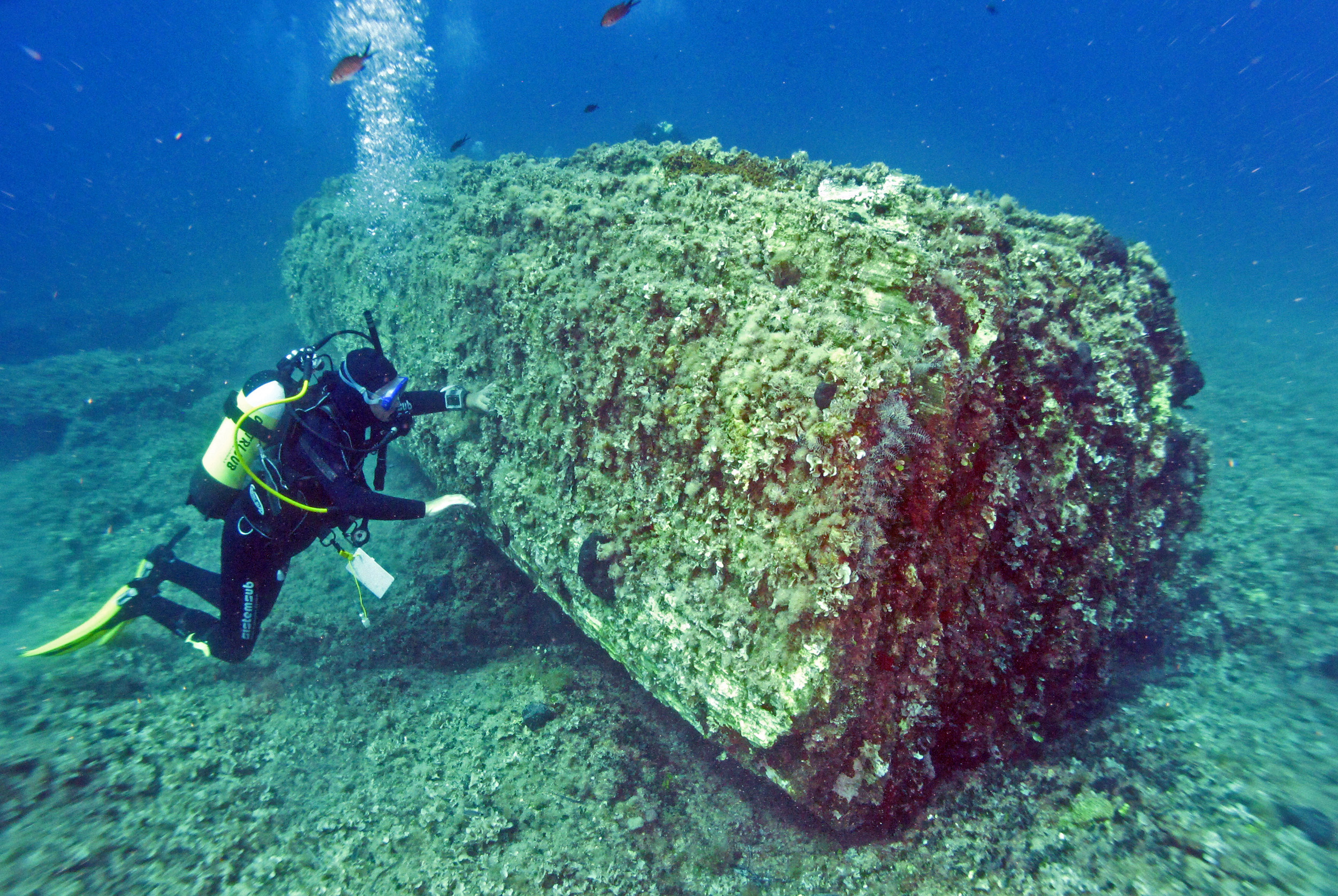
Diving itinerary Roman Columns of Marzamemi photo: Salvo Emma, Superintendency of the Sea (https://www.visitsicily.info/en/itinerario/marzamemi-wreck-of-the-columns/#)
Marzamemi 2 “Church Wreck”
Marzamemi 2 “Church Wreck” (The Marzamemi Church Wreck) is a world-famous marble-carrying shipwreck located off the coast of the village of Marzamemi, on the south-eastern coast of the Italian island of Sicily, and dating to the Late Antique/Early Byzantine period (6th century AD / circa 500–550 AD).
First discovered and investigated in the 1960s by Gerhard Kapitän, one of the pioneers of underwater archaeology, the wreck has been re-excavated and interpreted using modern methods since 2013 by Stanford University (led by Justin Leidwanger), the Institute of Nautical Archaeology (INA), and the Sicilian Maritime Superintendency (Soprintendenza del Mare).
The ship is known as the ‘Church Wreck’ because its massive architectural cargo, weighing over 100 tonnes, consisted of interior decorative elements from a prefabricated Early Christian basilica (church). These include more than 28 large marble columns, capitals, and bases in complete sets, whilst carved marble panels separating the church choir from the altar and fragments of a magnificent pulpit (ambon) carved from green stone have also been identified.
Geological and petrographic analyses have conclusively proven that the white marble with grey veins, which makes up the majority of the cargo, was quarried from the quarries on Marmara Island (ancient Prokonnesos) in the Sea of Marmara. After being roughly hewn and prepared as prefabricated (semi-finished) blocks at the imperial quarries on Marmara Island, the marble was loaded onto this specialised marble ship (navis marmorum) from the quays near Constantinople (Istanbul). Certain special decorative elements, such as the pulpit (ambon), were, however, crafted from the famous ancient green marble (Verde Antico) from the Thessaly region of Greece.
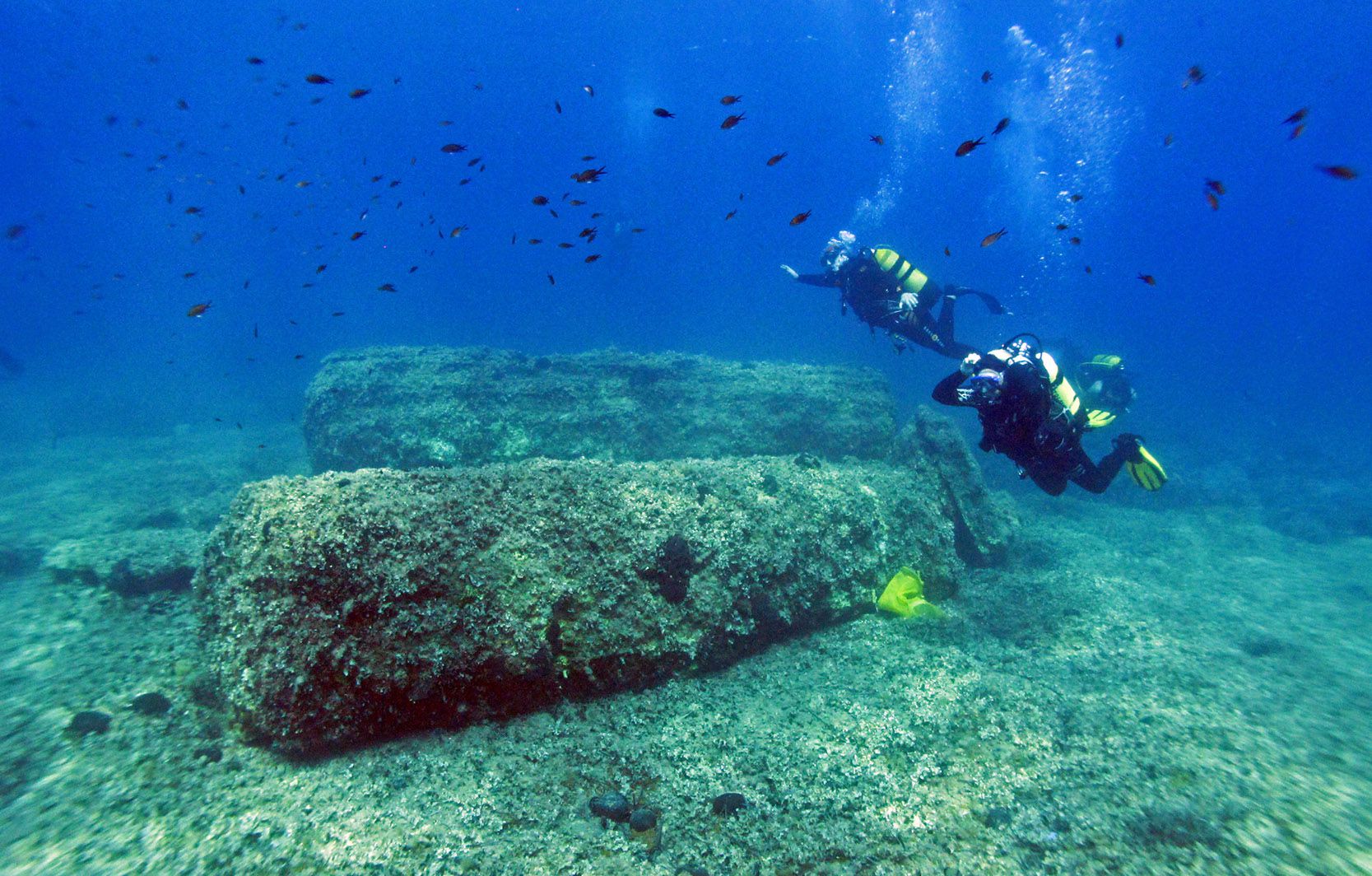
Itinerary of the Roman Columns of Marzamemi. photo: Salvo Emma, Superintendency of the Sea (https://www.visitsicily.info/en/itinerario/marzamemi-wreck-of-the-columns/#)
According to Gehard Kapitän’s initial theory from the 1960s, the ship was thought to have carried a ‘central and official’ state cargo for Emperor Justinian I; however, modern excavations carried out between 2013 and 2019 revealed that, beneath the main marble cargo, there were hundreds of wine amphorae, raw glass blocks, pigments (dyes) and kitchen pottery originating from the Eastern Mediterranean (Aegean and Levant). This finding demonstrates that the ship did not serve a single purpose under a state monopoly; whilst transporting marble, it was also an opportunistic merchant vessel engaging in free-market trade at ports along its route, carrying a mix of commercial goods and luxury items. The ship, carrying this heavy cargo from Constantinople and the Aegean, was likely heading towards a major port city in Sicily or North Africa. When it came too close to shallow coastal reefs, due to the manoeuvring disadvantages caused by its heavy load, it struck the rocks and sank.
Sessions on 19 June
At the fourth session held on 19 June, Jun Kimura spoke on ‘Directing our gaze to diversity in UCH', Sabrina Marlier on ‘The Arles-Rhône 3 Operation: An Example of UNESCO Best Practice in the Protection of Underwater Cultural Heritage’, and Athena Trakadas presented on ‘Ocean Heritage and Ocean Science: Culture, Climate Change and Sustainability Challenges’.
The Arles-Rhône 3 Operation
The Arles-Rhône 3 Operation is one of the largest, fastest, and most successful salvage operations in the history of underwater archaeology, involving the underwater recovery, restoration, and transfer to a museum of a 2,000-year-old Roman river trade vessel (chaland) discovered in the River Rhône in the city of Arles, France. Carried out in 2011, this operation ensured that the hull of the ancient vessel could be exhibited in a state of near-perfect preservation, with 93 per cent of the structure intact. Research indicates that the vessel dates from the 1st century AD (approximately 50–60 AD). The river silt that rapidly settled on the ship and the limestone blocks it was carrying cut off contact with oxygen, ensuring that the wood survived to the present day without decaying.
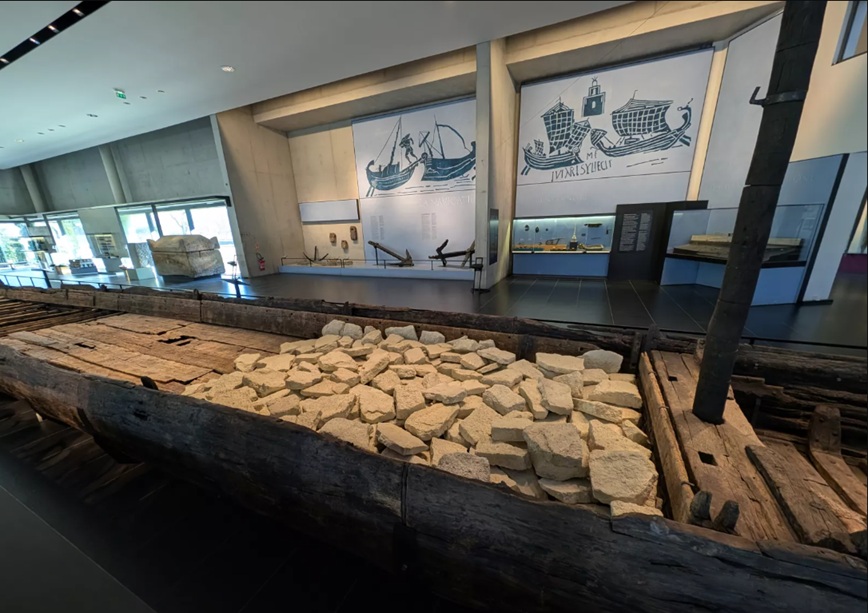
The hull of the Arles-Rhône 3, on display at the Arles Museum along with its cargo (https://www.arles-guide.com/museum-of-antiquity)
The Arles-Rhône 3 was not merely a ship’s hull; thanks to the protection afforded by the riverbed, it yielded priceless artefacts relating to ancient port trade. The ship’s final cargo consisted of massive limestone blocks weighing 33 tonnes, which had been transported for the construction of monumental buildings. Geological tests have shown that the mineral composition of the stones matches exactly that of the Roman quarries in the ancient region of Ernaginum (modern-day Tarascon), situated just 15 kilometres north of Arles. This evidence conclusively proves that the ship’s final route before sinking was from north to south (towards the port of Arles). To maintain stability in the river current, the ship’s hull contained heavy river pebbles and coarse marble fragments used as ballast. Furthermore, hundreds of wine and olive oil amphorae, along with the crew’s personal belongings and kitchenware, were found on board.
Whilst moored at the quay with this heavy cargo of stone, the ship became buried in mud due to a sudden river flood (flash flood); the weight of the limestone on board, however, anchored the wooden hull to the riverbed, preventing it from being torn apart by the current.
Meanwhile, archaeologists led by Luc Long, curator of the Arles Museum of Antiquities (Musée Bleu), made artistic discoveries that shook the Roman world whilst surveying the riverbed between 2007 and 2009, very close to the shipwreck. The life-sized marble statue of Neptune (God of the Sea), recovered from the riverbed, is an extraordinary example of Roman art dating from the 3rd century AD. This statue, which displays exceptionally high-quality craftsmanship, is thought to have fallen into the river from either a temple dedicated to river gods or a luxurious Roman villa. Petrographic tests carried out on the Neptune statue and some architectural blocks found in the riverbed have revealed that they were carved from white marble sourced from the famous Carrara (Ancient Luni) quarries in the Tuscany region of Italy. Carrara marble was the most favoured type of marble for official state sculptures throughout the Roman Empire.
During the same diving expedition as the Neptune statue, underwater archaeologists discovered a marble bust believed to be of Julius Caesar [Arles bust – Wikipedia, Arles Museum of Antiquity]. Dated to 46 BC (during Caesar’s lifetime), this bust is regarded as the world’s oldest portrait of Caesar, realistically depicting his old age, thinning hair, and wrinkles in a veristic style. Isotopic and mineralogical analyses carried out on the Caesar Bust (Arles Bust) have proven that it was carved from fine-grained, high-quality white marble quarried from the Dokimeion quarries (now Afyonkarahisar / İscehisar) in the region of Ancient Phrygia. The isotopic ratios of two microscopic samples taken from the bust have been traced directly to the boundaries of the Dokimeion source area, ruling out all other ancient marble quarries worldwide. This demonstrates that, even on the eve of the founding of the Roman Empire, Anatolian marble was being transported as part of the trade in luxury artworks as far as the westernmost tip of the Mediterranean.
During the same excavations, small marble statuettes carved in the Hellenistic style and depicting the satyr Marsyas—who, in mythology, competed against the god Apollo in a musical contest—were also unearthed from the river silt.
Using modern archaeometric tests, scientists have definitively determined the origins of both natural stones and artistic marble busts. These analyses combined Maximum Grain Size (MGS) measurements, cathodoluminescence (CL) microscopy and carbon-oxygen stable isotope analysis.
During the fifth session, Mladen Pešić presented on ‘Remains of the Ancient Roman Port in Sukošan near Zadar’, Alexander Belov on ‘Physiology and Hazards of Diving in Antiquity’, and Eric Rieth on ‘The Laurons 11 shipwreck (Bouches-du-Rhône, France); a vernacular Mediterranean coastal boat (early XVIIth century)'.
In the sixth and final session, Jan Vogt Knutsen, ‘Challenges in the Reconstruction of the Gokstad Ship’; Francesco Tiboni, ‘Twenty Years of Underwater Archaeology in Deep Italian Waters: Searching for a Strategy’; and Nayden Prahov, ‘Development of Bulgarian Underwater Archaeology: From Volunteer Enthusiasm to the Institute for Underwater Heritage’.
The symposium concluded with evaluations by Oğuz Aydemir, Metin Ataç, Ufuk Kocabaş, and Deborah Carlson. The symposium, chaired by Oğuz Aydemir, Chairman of the Board of the TINA Underwater Archaeology Foundation, included the following members on its Organising and Scientific Committee: Caroline N. Koç, Metin Ataç, Kenan Yılmaz, Jeff Hakko, Prof. Cemal Pulak, Prof. Ufuk Kocabaş, and Assoc. Prof. Dr Chris Roosevelt.
Cover Photo (https://www.koc.com.tr/medya-merkezi/haberler/2023/uluslararasi-mustafa-v-koc-su-alti-arkeolojisi-sempozyumu-gerceklestirildi)
References:
1 https://www.tinaturk.org/sempozyum-2026.html
2 https://nauticalarch.org/news-events/excavation-of-the-marzamemi-church-wreck/
3 Balıkesir Arkeoloji Buluşmaları Sempozyumu Mysia Ve Çevre Kültürleri 2021 Bildiriler Kitabı, Kasım 2022 (https://fliphtml5.com/jyulk/yvil/Bal%C4%B1kesir_Arkeoloji_Bulu%C5%9Fmalar%C4%B1_Sempozyumu_Mysia_Ve_%C3%87evre_K%C3%BClt%C3%BCrleri_2021_Bildiriler_Kitab%C4%B1/)
4 Leidwanger, J., Greene, E. S., Donnelly, A.;(2021). The Sixth -Century CE Shipwreck at Marzamemi, American Journal of Archaeology (https://ajaonline.org/wp-content/uploads/2021/03/aja.125.2.leidwanger.pdf)
5 Leidwanger, J. Excavation of the Marzamemi “Church Wreck”. https://www.dopapers.org/research/byzantine/project-grants/leidwanger-2014-2015
6 Bilir, A., Şahin, M.; 2022. Marble shipwrecks originating from Proconnesos Island. (https://www.academia.edu/81087122/Marble_shipwrecks_originating_from_Proconnesos_Island)
7 https://medlab.stanford.edu/projects/marzamemi-2
8 Ph. Blanc, Ph. Bromblet and L. Leroux. White Marbles Provenance Study of Caesar’s Head and Other Major Sculptures Found In The Rhône Rıver At Arles (France). In Interdisciplinary Studies on Ancient Stone Proceedings of the IX Association for the Study of Marbles and Other Stones in Antiquity (ASMOSIA) Conference (Tarragona 2009)
9 Sabrina Marlier, Pierre Poveda, Nicolas Ranchin. The Arles-Rhône 3 project : From the excavation and raising of a Gallo-Roman barge, in the southern coastal French city of Arles, to its documentation and modelling in 3D (2011-2012). 13th International Symposium on Boat and Ship Archaeology, Jerzy Gawronski; André van Holk; Beno van Tillburg, Oct 2012, Amsterdam, Netherlands. pp.383-389. ⟨halshs-01807685⟩
10 Sabrina MARLIER, Henri BERNARD-MAUGIRON. (2020) Nehirden Müzeye Arles-Rhône 3 Mavnası The Arles-Rhône 3 Barge, From The River To The Museum. TINA Denizcilik Arkeolojisi Dergisi. Volume 7 (ISSUE 13-14)( https://www.tinaturk.org/dergi/TINA_DERGI_SAYI_14/tina-14.pdf)
Recent News
Street unearthed in Aspendos
Restoration of Haydarpaşa Station continues
#Haydarpaşa Train Station #Lefke Stone (sandstone) #Hereke Granite
Stoneline Publications’ third book: SELİMİYE
Sümela Monastery reopened to visitors
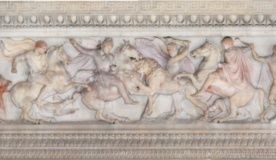
The Granikos Battlefield has been placed under protection
#Marmara marble #Prokonnesos marble #Granikos Battle
The Second Edition of Mimarlar İçin Doğal Taş Rehberi and the English Edition, Natural Stone Guide for Architects, Have Been Published
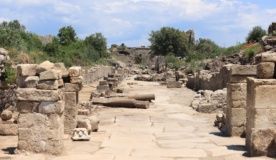
One of the main streets of Ancient Side has been unearthed
#conglomerate #Side Ancient City #Feriştah Alanyalı
The historic Yalı Pavilion is to be reconstructed
The theme of the Edirne Biennial: Bridges
A ‘stone hospital’ has been set up in Ephesus for the restoration of stones