The Granikos Battlefield has been placed under protection
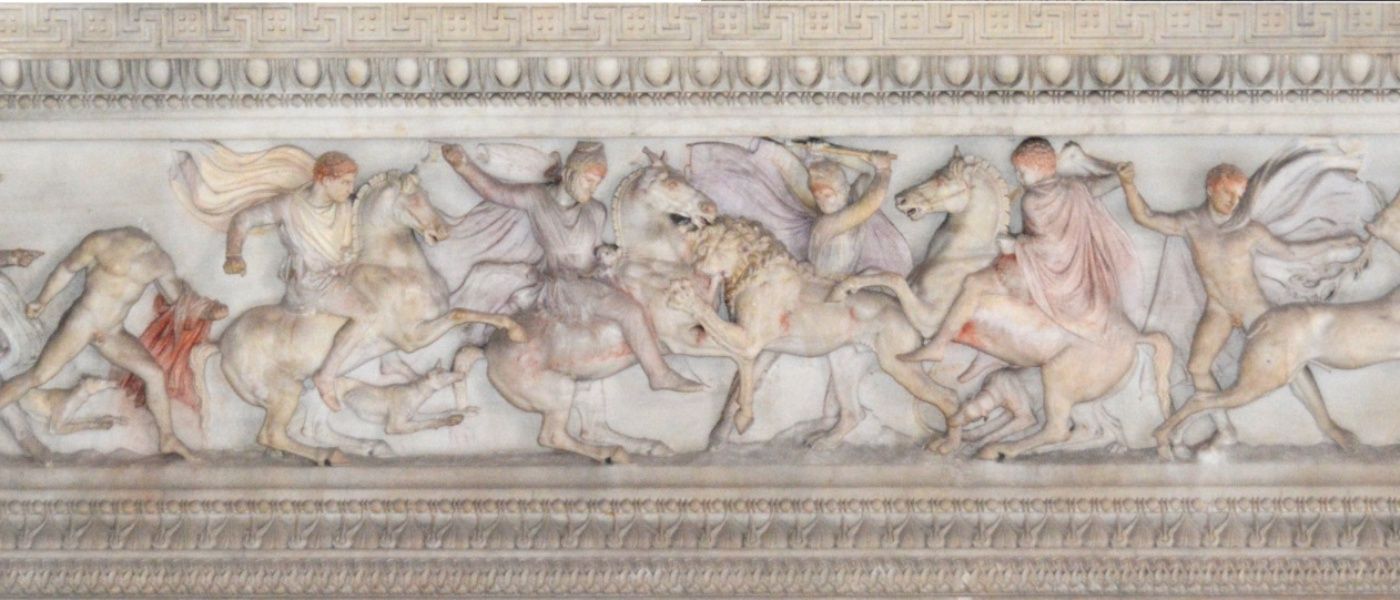
Photo source: Detail of sarcophagus taken from the museum brochure of the Istanbul Archaeology Museums.
According to a statement from the Ministry of Culture and Tourism, the area within the boundaries of the Karabiga township, part of the Biga district of Çanakkale, and recognised as the site of the Battle of Granikos, was assessed in line with archaeological and scientific data obtained from surface surveys and ancient sources. Following a decision by the Çanakkale Regional Council for the Protection of Cultural Assets, the site of the Battle of Granikos within the boundaries of the Biga district—recognised as one of the most critical military engagements in world history—has been placed under protection as a “historic site”.
The Battle of Granicus
In the historiography of the Persian-Macedonian wars, these battles are significant events, particularly as they marked a change in the administration of Asia Minor and the Near East that had persisted for approximately two centuries. According to Sezer (2024), the Battle of Granicus secured Asia Minor for Alexander the Great; the Battle of Issus opened the door to the Near East; and the Battle of Gaugamela effectively brought about the end of the Persian Empire. In his view, the Persians suffered a major defeat in these battles due to their significant weaknesses in terms of equipment and discipline.(1)
The Battle Field of Granicus
The Battle of Granicus, which took place on the banks of the Granicus River in 334 BC, was Alexander the Great’s first major victory against the Persians. Until recently, no detailed archaeological surface survey had been carried out at this battlefield. Academic debate also continues regarding the routes taken by the armies before and after the battle. To resolve these uncertainties, an archaeological surface survey was launched in 2022 to determine the exact location of the battlefield. Körpe (2025) notes that the work carried out between 2022 and 2024 indicates the battle took place further south in the plain than previously thought. Furthermore, he suggests that the view that the hill where the final phase of the battle took place may be Höyükbayırı Tepe has gained strength; and that Çiğdem Tepe, situated above Hisarlı Village, is thought to be Hermaion, the final campsite of Alexander as he advanced from Arisbe to the Granicus.(2)
Misconceptions regarding stone depictions of the Battle of Granicus
There is no ancient stone relief or mosaic that has survived to the present day and has been definitively confirmed by archaeologists as depicting the Battle of Granicus. However, as Granicus was Alexander the Great’s first major and monumental victory against the Persian Empire, it was immediately mythologised by ancient artists. In internet research, specific depictions directly or indirectly associated with this battle appear in a few key archaeological works:
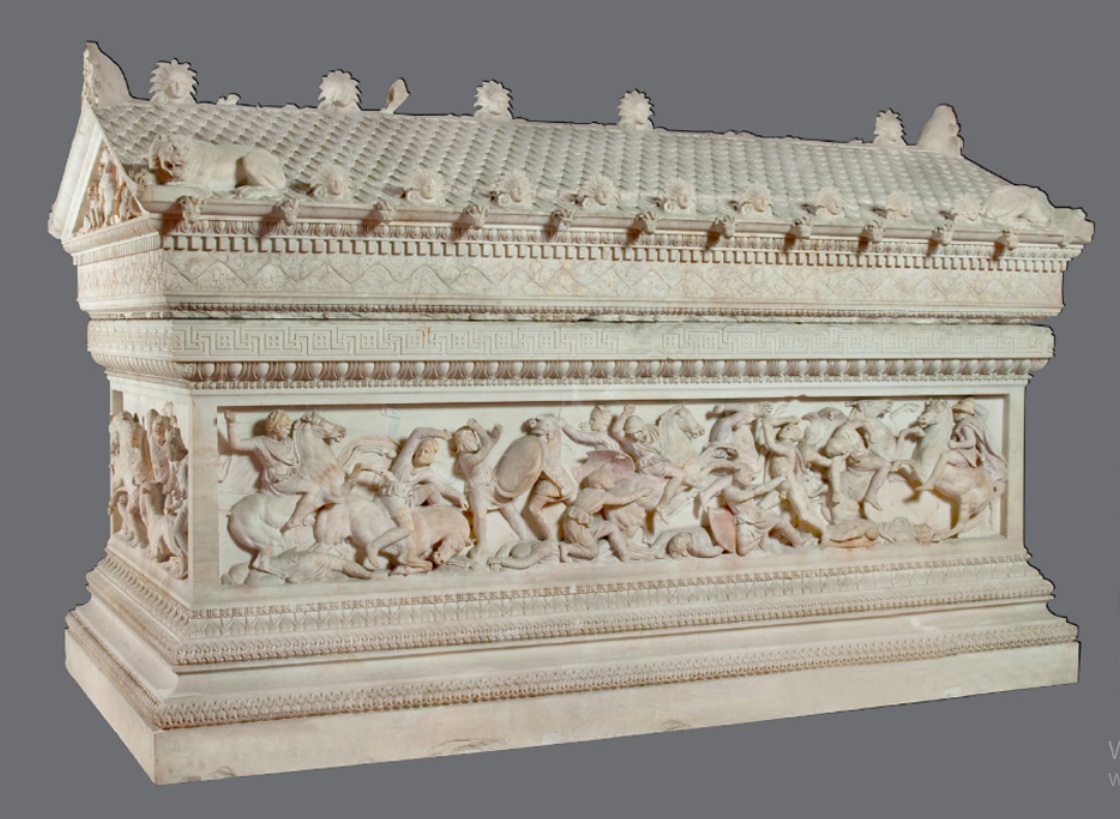
The Sarcophagus of Alexander, collection of the Istanbul Archaeology Museums. Source: Museum Brochure
“The Sarcophagus of Alexander”, carved from Pentelic marble
The most significant ancient stone carving most closely associated with the Battle of Granicus is the Sarcophagus of Alexander, on display at the Istanbul Archaeology Museums. Discovered in 1887 in the royal necropolis of Sidon, the sarcophagus is believed to have belonged to King Abdalonymos of Sidon. On the front of the sarcophagus, to the left, Alexander is depicted on horseback. One of the long sides of the sarcophagus features a battle scene between the Persians and the Greeks. It is thought that the battle scene represents the Battle of Issus, which Alexander won in 333 BC and which opened the door to Phoenicia and Syria for him. One of the consequences of this battle was the change in the fate of Abdalonymos, who is believed to be the owner of the sarcophagus, and his subsequent ascension to the throne of Sidon (3). Modern archaeologists note that although this stone relief accurately reflects the weapons, Persian attire and tactical chaos of the Granicus, it is less a literal geographical map of the riverbed and more a general amalgamation and tribute to all the victories Alexander won against the Persians. Numerous encyclopaedias, historical texts and archival records from the 19th and 20th centuries have explicitly presented this panel relief under the heading ‘Battle of Granicus’.
The sarcophagus and its lid are made of Pentelic marble; the main and side panels are carved using the high relief technique. Pentelic marble is one of the famous marbles quarried from Mount Pentelikon near Athens; it is known for its pure whiteness and distinctive lustrous texture. The fineness of Pentelic marble has allowed for the highly detailed carving of the Ionic temple-style motifs, scenes of the wars against the Persians, and hunting scenes featuring Alexander the Great on the sarcophagus. The natural composition of Pentelic marble has ensured that the original traces of red, purple, blue and yellow paint on the surface of the sarcophagus have blended over time and survived to the present day.
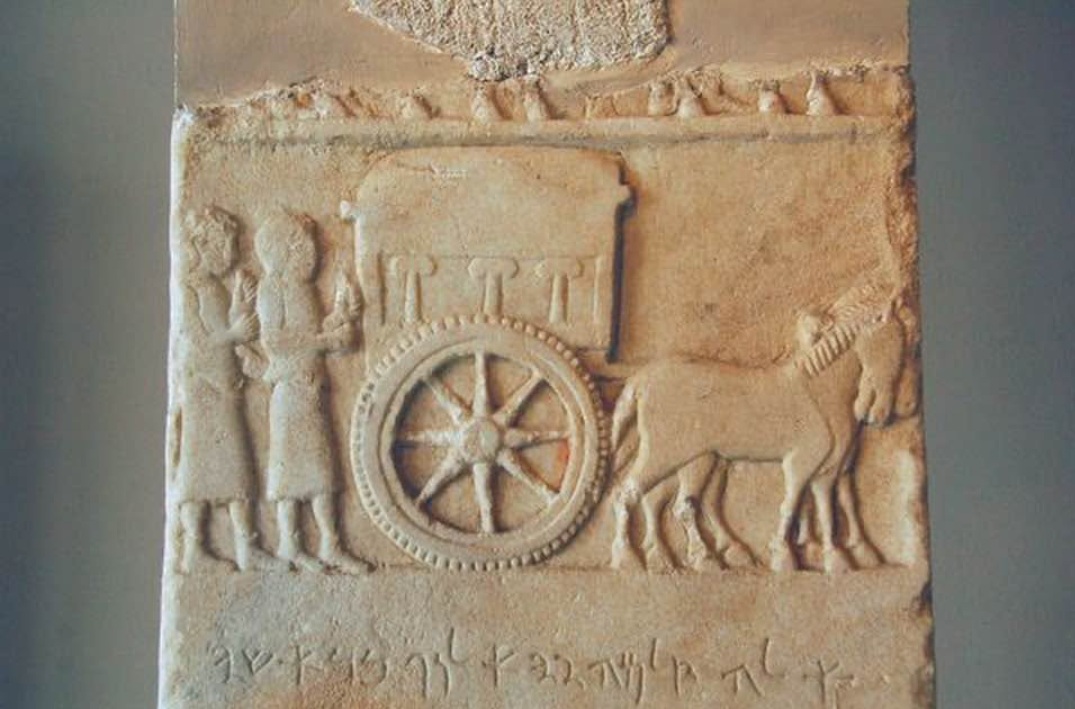
Marble Funerary Stele, Daskyleion/Balıkesir, 5th century BC, Collection of the Istanbul Archaeology Museums. Photo: Istanbul Archaeology Museums Facebook page.
The Greek-Persian Reliefs of Daskyleion
The regional capital where the Persian satraps (governors) planned the Battle of the Granicus is the ancient city of Daskyleion (near Bandırma), located in north-western Turkey today. Excavations at Daskyleion have unearthed stone reliefs dating from the 5th and 4th centuries BC, depicting local Persian cavalry and Greek-Persian conflicts. Although these stone carvings and stelae primarily represent the political propaganda of the era, depicting regional wars prior to Alexander’s arrival, they also provide an artistic and cultural template of how local soldiers actually fought at Granicus. The stelae, which various sources suggest were made of Marmara marble, are now housed in the Istanbul Archaeology Museum.
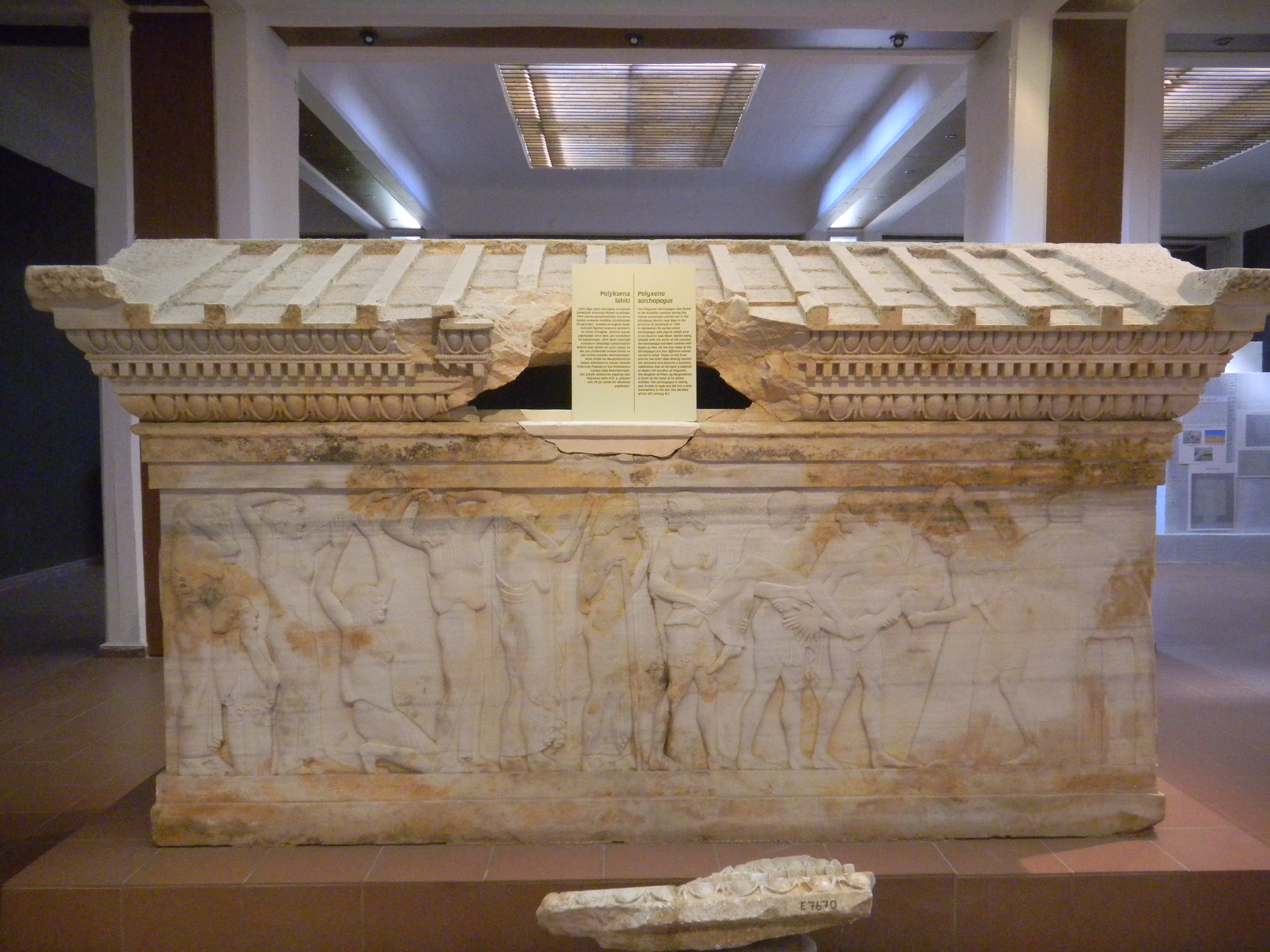
Polyxena Sarcophagus. Photo: Elisa Triolo. 24 June 2011. Çanakkale Archaeological Museum (https://tr.wikipedia.org/wiki/Polyksena_Lahdi)
Sarcophagi from the Gümüşçay and Biga Areas (Troy Museum)
The most significant artistic depictions carved in stone in the Granikos (Kocabaş) Basin—the epicentre of the war—are the Persian-period sarcophagi unearthed in the region. The Polysena Sarcophagus, located near Gümüşçay in the Biga district of Çanakkale, and the Altıkulaç Sarcophagus, found in the Granikos Basin, are on display at the Troy Museum. The Polysena Sarcophagus, carved from Marmara marble, dates from the late 6th century BC. As the earliest example of a figuratively decorated sarcophagus in Anatolia, it features unique reliefs depicting local mythological scenes and life during the Persian period, predating Alexander’s arrival. The Altıkulaç (Çan) Sarcophagus, meanwhile, is a Greco-Persian style sarcophagus made of Marmara marble, notable for its reliefs depicting hunting and battle scenes that have retained their vivid colours (5).
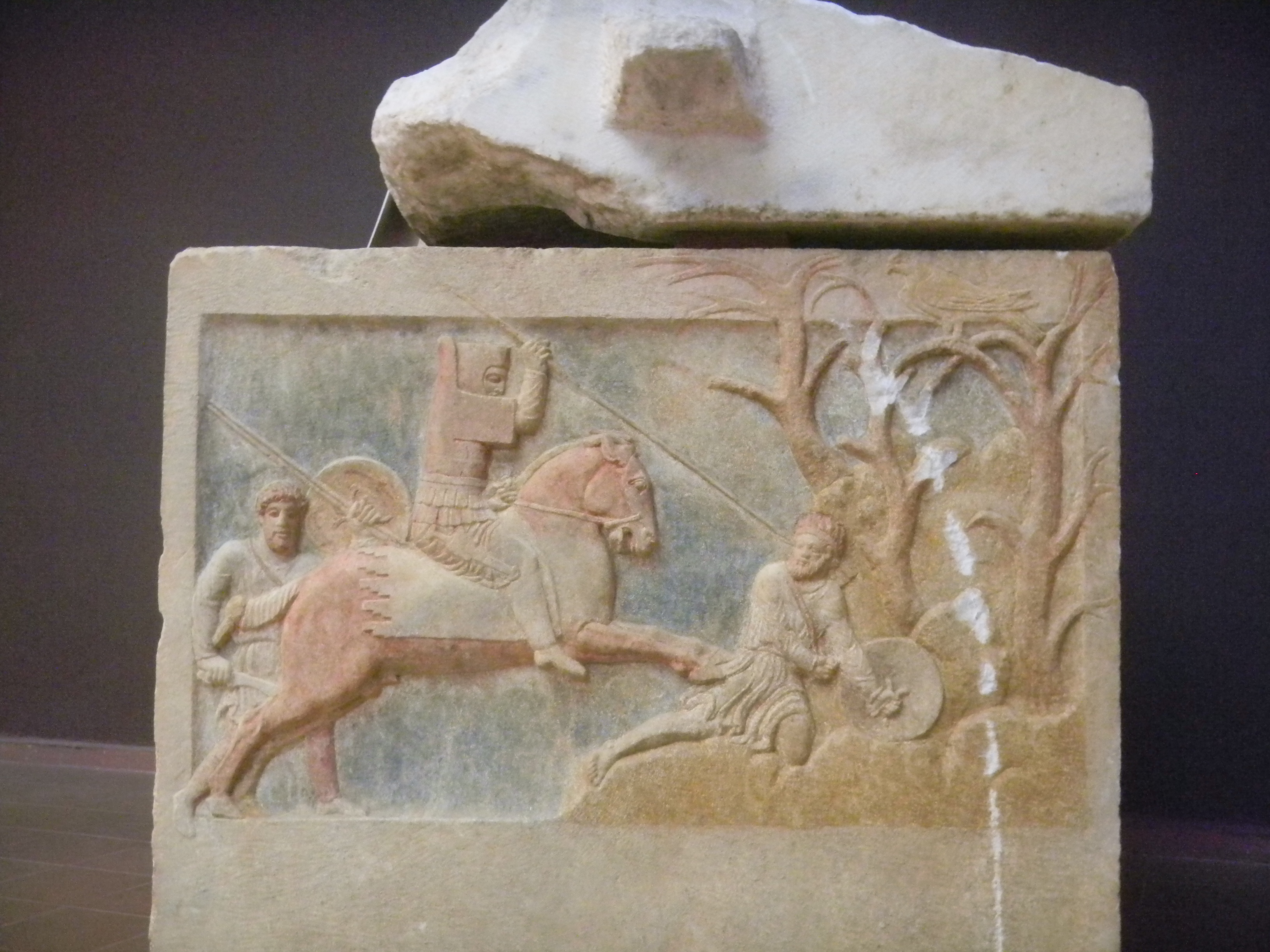
Altıkulaç Sarcophagus. Detail of a Phrygian horseman attacking a Greek psiloi full view. Photo: Elisa Triolo. 24 June 2011. Çanakkale Archaeological Museum. (https://tr.wikipedia.org/wiki/Altıkulaç_Lahdi)
Confusions regarding “the Alexander Mosaic”
Due to the great fame of the Battle of Granicus, media outlets reporting on archaeological work at the Granicus battlefield (including the latest discoveries by Çanakkale Onsekiz Mart University, which have pinpointed the exact location of the battle) generally use the famous Alexander Mosaic from Pompeii for illustration. However, there is no ancient mosaic that archaeologists have confirmed as unique to Granikos; the Alexander Mosaic, also known as the Battle of Issus Mosaic, is a Roman floor mosaic originally from the House of the Faun in Pompeii, Italy.
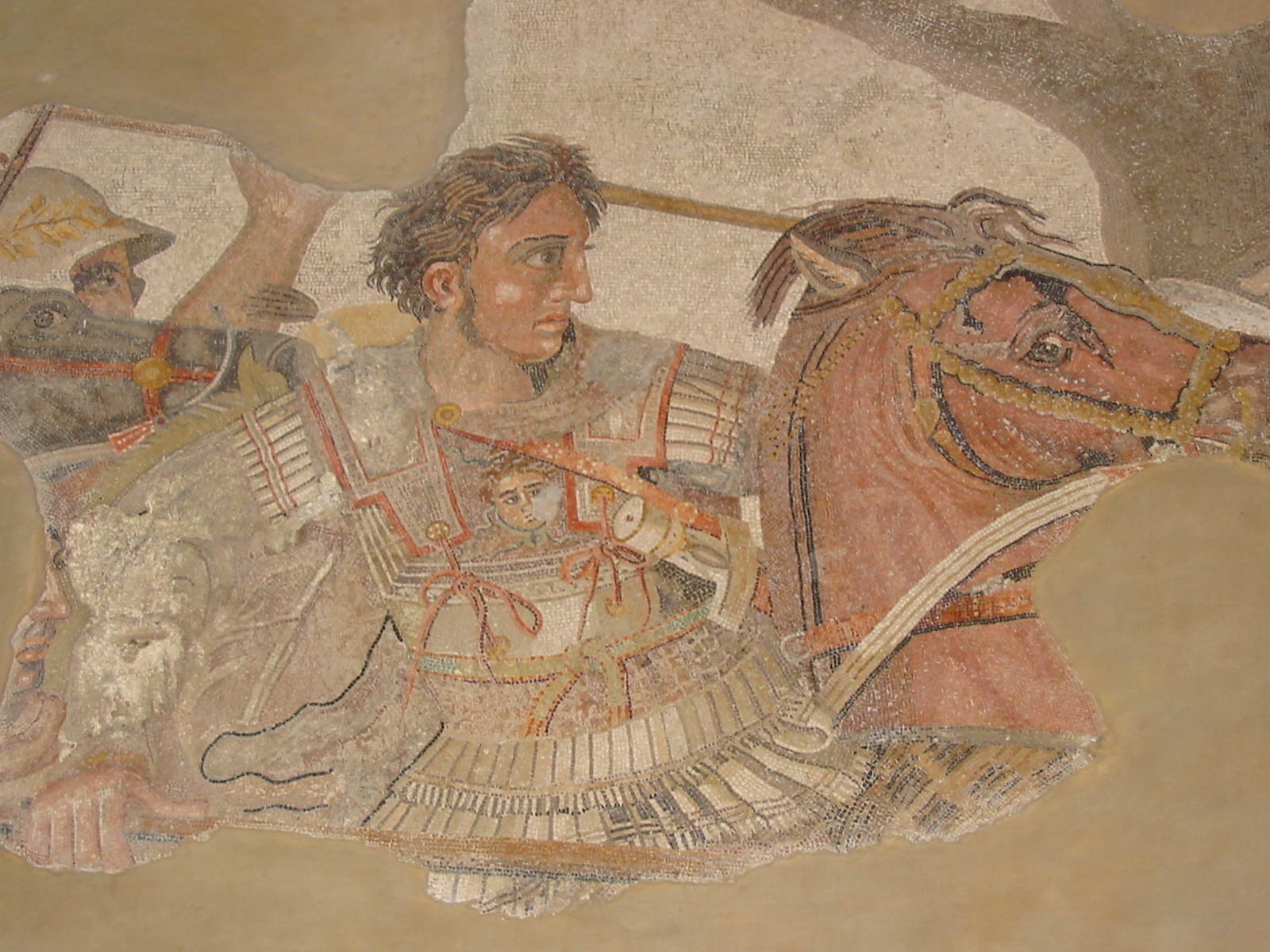
Alexander and Bucephalus (Detail from Battle of Issus mosaic, House of the Faun, Pompeii), Museo Archeologico Nazionale, Naples. Photo: Berthold Werner, May 2013. (Wikipedia/Alexander_Mosaic)
Following the style of many other Hellenistic artists, the mosaic consists entirely of red, yellow, black, and white colours. As there are areas where certain details have been damaged or altered, evidence has been found suggesting that the mosaic was imported from the East. Some academics argue that this proves the mosaic was created in pieces and reassembled in Pompeii.
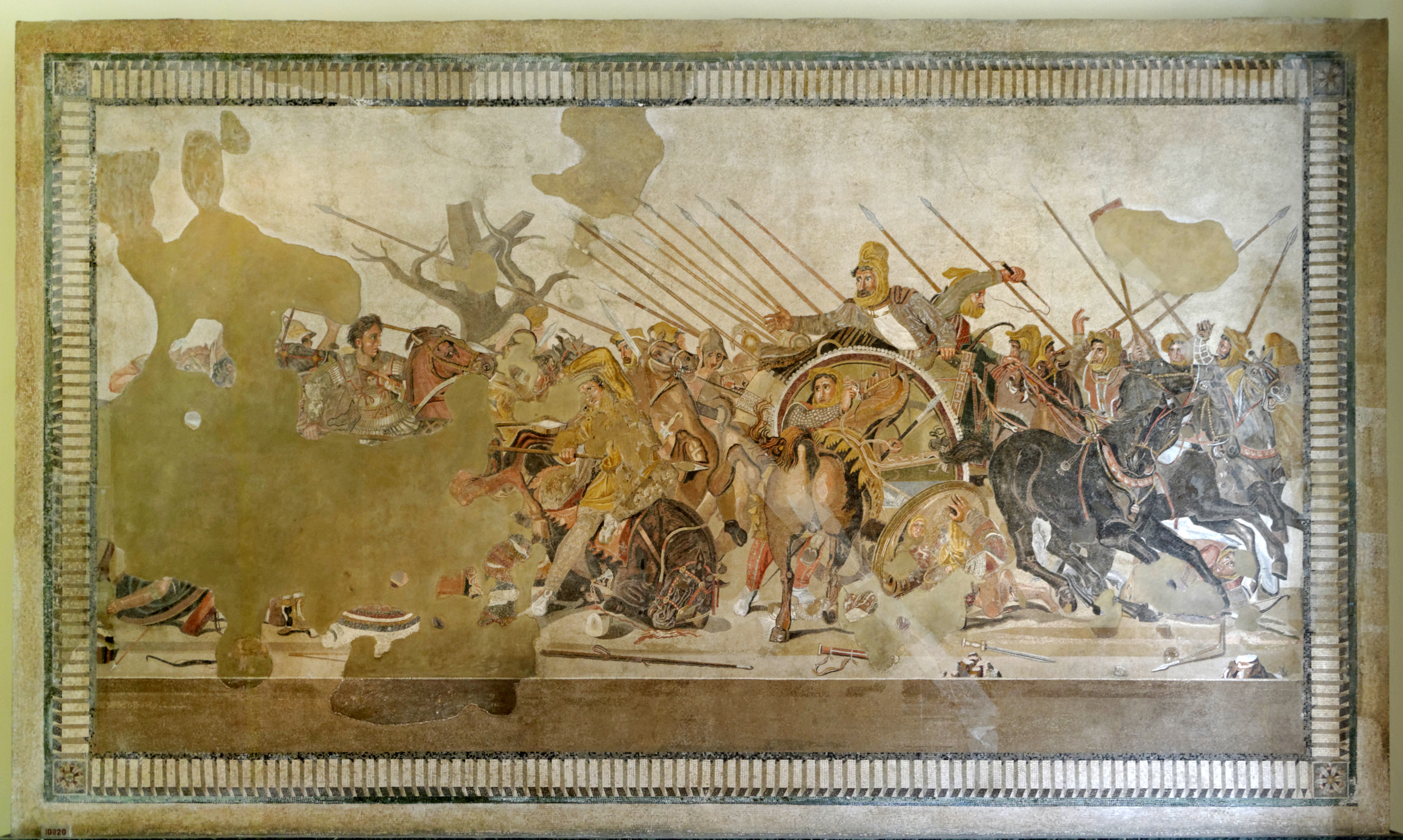
Reconstruction of a mosaic depiction of the Battle of Issus after a painting supposed to be by Apelles or Philoxenus of Eretria found in the House of the Faun at Pompeii. Photo: Berthold Werner, Naples National Archaeological Museum, May 2013. (Wikipedia/Alexander_Mosaic).
Notes ve References:
1. Sezer, D. S. (2024). Tarihte Pers-Makedon Mücadelesi: Granikos, İssos ve Gaugamela Savaşları. Akademik Tarih ve Düşünce Dergisi, 11(5), 2899-2920. https://doi.org/10.46868/atdd.2024.798
2. Korpe, R. (2025). 2022-2024 Granikos Savaş Alanı Yüzey Araştırmaları Yeni Bulgular Yeni Sonuçlar. Troy Museum Journal, Prof. Dr. A. Coşkun Özgünel III. Troas Sempozyumu Özel Sayısı, 107-123. https://izlik.org/JA93NN45KP
3. https://www.istanbularkeoloji.gov.tr
4. SOSLU, S. (2024). İskender Lahdi, İçinde, Kozak, N. (Editör), Online Türkiye Turizm Ansiklopedisi, https://turkiyeturizmansiklopedisi.com/iskender-lahdi (Erişim tarihi: 11.06.2026).
5. The sarcophagi, which had been on display at the Çanakkale Archaeology Museum, were transferred to the Troy Museum, which was established in 2018.
Recent News
Street unearthed in Aspendos
Restoration of Haydarpaşa Station continues
#Haydarpaşa Train Station #Lefke Stone (sandstone) #Hereke Granite
Stoneline Publications’ third book: SELİMİYE
Sümela Monastery reopened to visitors

International Mustafa V. Koç Underwater Archaeology Symposium
#Prokonnesos quarry #Verde Antico #Marmor Docimium, Pavonazzetto, Afyon Violet
The Second Edition of Mimarlar İçin Doğal Taş Rehberi and the English Edition, Natural Stone Guide for Architects, Have Been Published
One of the main streets of Ancient Side has been unearthed
#conglomerate #Side Ancient City #Feriştah Alanyalı
The historic Yalı Pavilion is to be reconstructed
The theme of the Edirne Biennial: Bridges
A ‘stone hospital’ has been set up in Ephesus for the restoration of stones