A ‘stone hospital’ has been set up in Ephesus for the restoration of stones
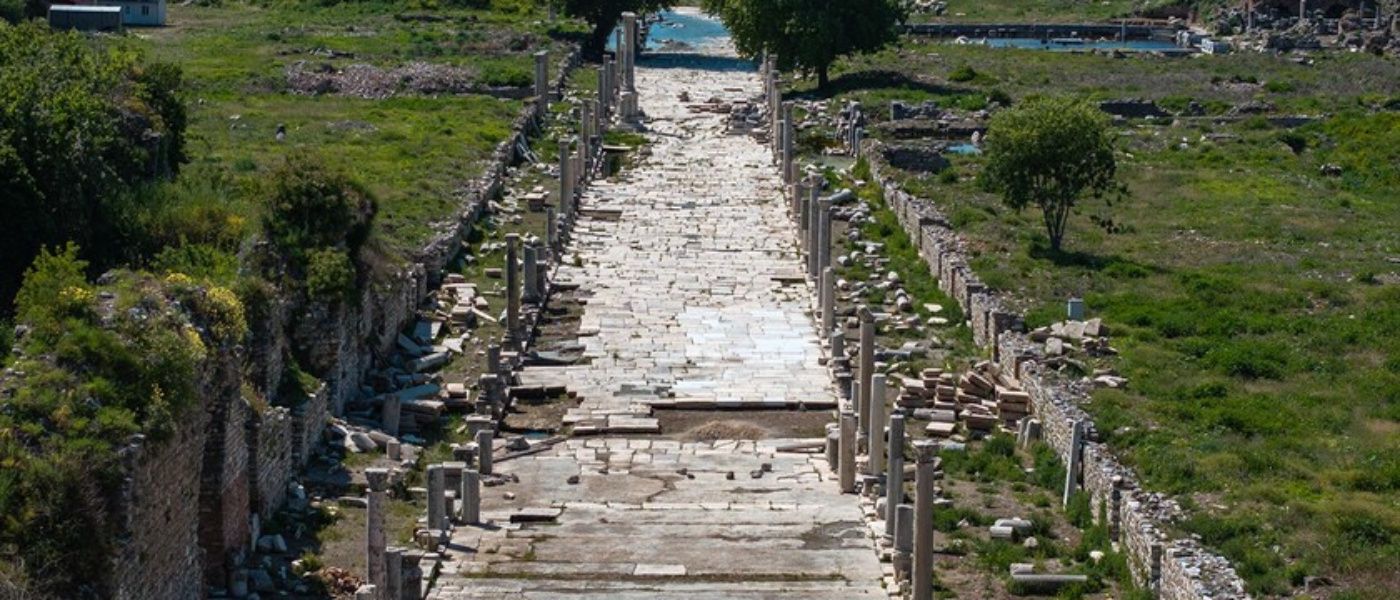
Prof. Dr Bahadır Duman, coordinator of the “Ephesus: An Enduring Legacy for the Future” project and a lecturer in the Department of Archaeology at the Faculty of Humanities and Social Sciences, Pamukkale University, told an AA correspondent that the “Ephesus: An Enduring Legacy for the Future” works, which began in 2023, are concentrated in the visitor reception centre, Stadium Street and the ancient theatre. Duman noted that the work is being carried out using scientific methods by a team of 200–250 local and international experts, including archaeologists, restorers, geologists, architects and engineers.
Ephesus’s ‘Stone Hospital’
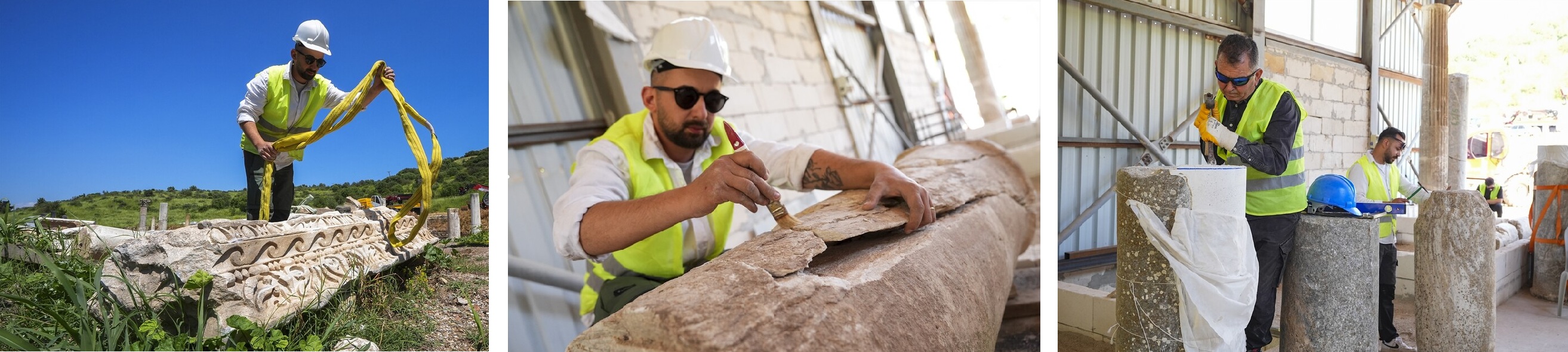
Duman, explaining that the restoration of the columns, bases and capitals on Stadyum Street is ongoing, stated that they had set up a ‘stone hospital’ alongside the street for the work. Here, broken columns, bases, capitals and inscribed blocks are being examined one by one by specialist staff. These stones are first examined in minute detail, sketched and documented; potential interventions are then decided upon by restorers and specialist staff, after which they undergo mechanical, chemical, joining, consolidation and cleaning processes. Once restoration is complete, the pieces are returned to their original locations
The 2,500-Year-Old Stadyum Street
Prof. Dr. Duman explained that Stadyum Street had been in active use for approximately 2,500 years, having been destroyed over time by earthquakes, natural disasters and fires. The work being carried out on Stadyum Street is also revealing traces of repairs from the ancient period. Noting that the Ephesians had made efforts to replace the columns that had collapsed during that period, Duman stated: “Not everything was done in an orderly manner; sometimes bases were used as capitals, and sometimes columns were turned upside down or placed on top of one another. ‘There are many such interventions from the ancient period. We are keeping our interventions to a minimum so that visitors can better appreciate the ancient era,’ he explained. Duman stated that they had identified between 120 and 130 columns and bases along the street, adding that restoration work on 60 per cent of these had been completed, with the remainder due to be finished in the coming months.
The Greek and Latin inscriptions and statue plinths along the street are also key elements of the new arrangements. Translations of the inscriptions into Turkish and English are being prepared with the aim of providing visitors with more comprehensive information about public life, the city’s rulers and its architectural structures in the ancient city.
The next phase of the project will focus on the ancient theatre and Harbour Street. Whilst excavation and restoration work continues on the paving, columns and Roman baths along Harbour Street, conservation measures based on anastylosis are also planned to commence for the Middle Harbour Gate.
Emphasising that Ephesus was one of the most important metropolises of Asia Minor, Duman notes that, with the completion of these works, visitors will encounter a new tour route unlike anything they have experienced before. The aim is to have the restoration work on Stadium Street and Harbour Street largely completed by the end of the year.
News source and photographs: Mehmet Emin Mengüarslan /AA
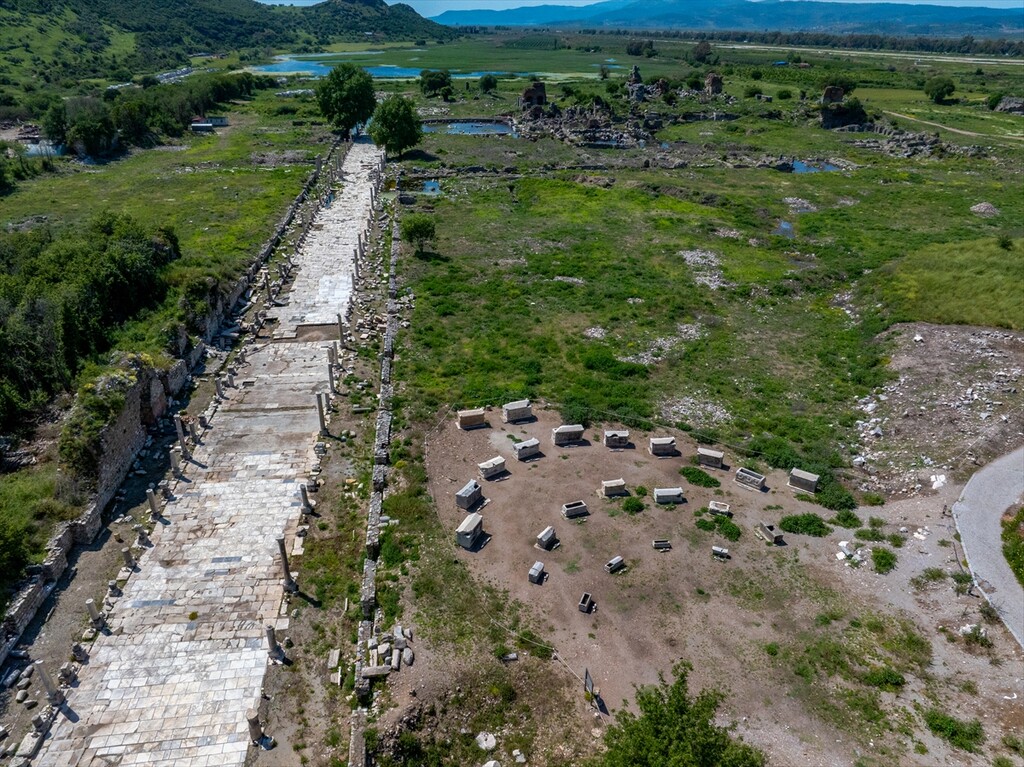
The origin of the stones on Stadium Street
The stones on Stadium Street in the Ancient City of Ephesus are original marble columns, bases and inscribed blocks from the Roman and Hellenistic periods, which have been toppled by earthquakes and natural disasters over the centuries. The vast majority of the stones consist of high-quality marble blocks that reflect the architectural aesthetics of that era. These stones belong to the area surrounding the stadium and the gymnasium (bath-school complexes), which were extensively used in the late Roman period for sporting events and gladiatorial combat. In the Yamaç Evler area near the street, details made from the locally distinctive ‘Greco Scritto’ marble (such as bathtubs) also point to the region’s rich Roman architectural heritage.
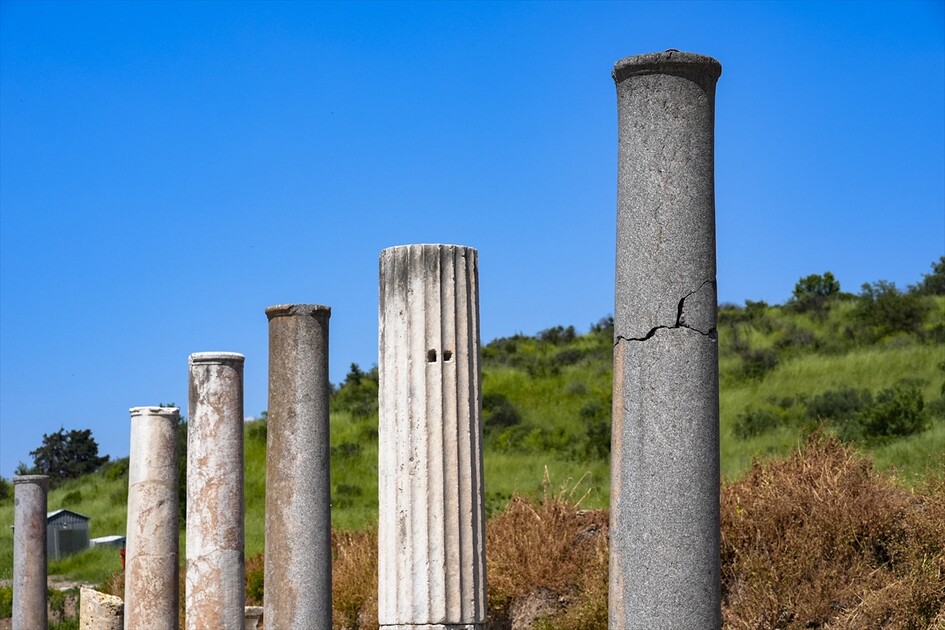
The primary types of stone used in the architectural structures along Stadium Street are local marbles quarried around Ephesus, travertine, and coloured stones used for prestige purposes, some of which were quarried locally and others imported. The species names of these stones, as revealed by ongoing lithological and petrographic research, and the locations of the ancient quarries from which they were extracted are as follows:
White and Grey Marbles (Local Stones)
The columns, capitals, plinths and the vast majority of the paving on the street are made from these local marbles. A fine- to medium-grained, calcareous marble with white and faint grey veining. It is known as Ephesus I. Located approximately 13–15 km from Ephesus, on the Selçuk–Tire road, the Belevi Ancient Marble Quarries and the Kuşini (Kuşini İni) Quarries have supplied the primary raw material for Stadyum Street and all of Ephesus’s monumental structures.
“Greco Scritto” Marble (Regional and Local Commercial Stone)
Recent excavations on Stadyum Street have uncovered monumental marble basins and luxury cladding made of ‘Greco Scritto’ marble. Contrary to the previously held belief that Greco Scritto marble used during the Roman period was predominantly sourced from Algeria, recent research has revealed that it was in fact sourced locally. It is a characteristic marble featuring dark grey and blackish irregular veins on a white background. The marble, quarried from the Hasançavuşlar Ancient Quarry near Germencik in the Aydın region, situated in the hinterland of Ephesus, became highly popular throughout the Roman Empire and was exported to various regions of the empire via the Port of Ephesus.
Porous Limestone and Travertine (Foundation and Load-Bearing Stones)
Travertine was used in the portico (colonnade) foundations of the stadium structure, within the arches, and in the hidden load-bearing walls behind the marble cladding. These limestone/travertine stones are porous, easy to work with, lightweight and pressure-resistant, and are yellowish-brown in colour. They were quarried in blocks from local limestone deposits in the Değirmendere and Kuşadası areas, situated very close to Ephesus.
Coloured Column Marbles (Imported and Prestige Stones)
These are monolithic (single-piece) coloured columns used for decorative purposes in the street’s monumental gates or special sections. They are high-prestige marbles featuring veins in various colours such as green and purple. Cipollino Verde (Green Marble), with its green and white wavy stripes, is quarried from the Karystos quarries on the Greek island of Euboea. Pavonazzetto (Afyon Marble), on the other hand, is a luxurious marble with purple-violet veins on a white background. It is quarried from the ancient quarries of Afyonkarahisar (İscehisar - Dokimeion).
References:
Attanasio, D., Yavuz, A. B., Bruno, M., Herrmann, J. J., & Tykot, R. H. (2009). On the Ephesian origin of greco scritto marble. Archaeometry, 51(3), 382–398. doi.org
Österreichisches Archäologisches Institut. (1906–günümüz). Forschungen in Ephesos [Efes Araştırmaları Monografi Serisi]. Verlag der Österreichischen Akademie der Wissenschaften.
Pensabene, P. (2002). Marmora Romana: Quarries, trade, and archaeology of marble. L'Erma di Bretschneider.
Prochaska, W., & Grillo, S. M. (2012). The marble quarries of the metropolis of Ephesos and some examples of the use for marbles in Ephesian architecture and sculpturing. S. Camporeale, H. Dessales, & A. Pizzo (Ed.), Arqueología de la construcción III: Canteras, explotación y procesos de transformación içinde (ss. 233–241). Instituto de Arqueología de Mérida.
Şimşek, C. (2007). Laodikeia ve Efes yapılarında traverten ve kireçtaşı kullanımının statik gerekçeleri. Pamukkale Üniversitesi Arkeoloji Enstitüsü Yayınları.
Vitruvius Pollio. (2005). Mimarlık üzerine on kitap (S. Güven, Çev.). Şevki Vanlı Mimarlık Vakfı Yayınları. (Orijinal eserin yazım tarihi M.Ö. 1. yüzyıl).
Wieland, E., Vavro, M., & Prochaska, W. (2023). A databank for the white marbles from the region of Ephesos. Journal of Archaeological Science: Reports, 51, Makale 104192. doi.org
Recent News
Street unearthed in Aspendos
Restoration of Haydarpaşa Station continues
#Haydarpaşa Train Station #Lefke Stone (sandstone) #Hereke Granite
Stoneline Publications’ third book: SELİMİYE
Sümela Monastery reopened to visitors

International Mustafa V. Koç Underwater Archaeology Symposium
#Prokonnesos quarry #Verde Antico #Marmor Docimium, Pavonazzetto, Afyon Violet
The Granikos Battlefield has been placed under protection
#Marmara marble #Prokonnesos marble #Granikos Battle
The Second Edition of Mimarlar İçin Doğal Taş Rehberi and the English Edition, Natural Stone Guide for Architects, Have Been Published
One of the main streets of Ancient Side has been unearthed
#conglomerate #Side Ancient City #Feriştah Alanyalı
The historic Yalı Pavilion is to be reconstructed
The theme of the Edirne Biennial: Bridges