“Does Stone Speak?”
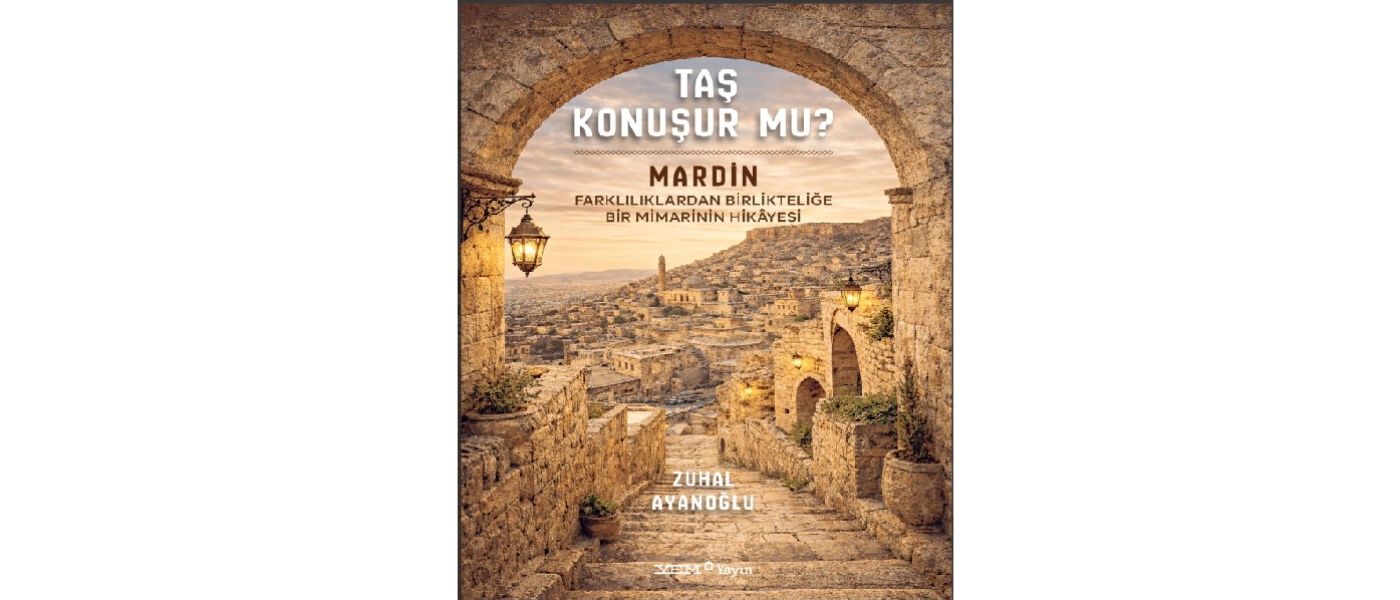
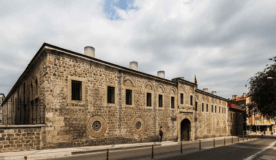
Architect and Restorer Zuhal Ayanoğlu describes Mardin—a city steeped in Mesopotamia’s millennia-old cultural heritage and situated at the crossroads of diverse religions, languages, ethnic identities and cultures throughout history—as more than just a ‘city of stone’; she examines it as a multi-layered space of civilisation shaped not only by the aesthetic and artisanal language of stonework but also by a culture of love, respect, tolerance, courtesy, empathy and coexistence.
Rather than focusing solely on the city centre, Ayanoğlu examines Mardin within a holistic framework that encompasses all its districts; she presents the residential fabric, places of worship, educational buildings and public spaces as indicators of a settlement culture shaped by an approach that takes into account the sunlight, views, water and living spaces of others.
Zuhal Ayanoğlu summarises her thoughts on Mardin and the book which opens with ‘Forewords’ by Prof. Dr Metin Sözen, Prof. Dr Önder Küçükerman, and Dr M. Sinan Genim, as follows:
“In Mardin, stone is not merely a structural material. Whilst embodying patience, labour, aesthetic intuition and a craftsmanship passed down through generations, stone is also the silent narrator of a way of life. The narrow dimensions of the streets, the inward-facing layout of the courtyards, the positioning of the terraces overlooking one another, and the transitional language established by the intermediate spaces reveal that the city does not merely produce a formal unity, but has also developed a sense of balance that regulates human relationships. This balance elevates Mardin beyond the status of an ordinary historical city, transforming it into the ‘architecture of spatial harmony’.
Mardin is remarkable not only for its historical urban architecture, but also for the layers of meaning inherent in its architecture and urban spaces. For the language of stone does not merely recount the past; it also questions the present. This silent narrative, which can be read in Mardin’s streets, courtyards, terraces and stone carvings, demonstrates that people can live whilst respecting others’ rights, that differences can coexist as a source of richness, and that this culture can be sustained through the built environment.
Consequently, it is not merely the grandeur of the stone that makes Mardin so valuable, but the human refinement that has been preserved within it. The city’s true heritage lies in the culture of grace, respect, empathy and brotherhood that lies behind its formal beauty. For this reason, to read Mardin is, in essence, for humanity to rediscover itself. The question ‘Does Stone Speak?’ is, in this context, not merely a title; it is a call directed towards the depth of the relationship between human beings and their surroundings. For whilst some cities are silent, others speak to humanity through the language of stone. Mardin is one of the oldest and most powerful examples of this...”
Edited by Burçin Yılmaz, with Turkish proofreading by Burcu Bilir Agalar and graphic design and pre-press work by Kemal Kara, the book presents Mardin to the reader in a comprehensive manner across four main sections, each with sub-sections.
Recent News
Street unearthed in Aspendos
Restoration of Haydarpaşa Station continues
#Haydarpaşa Train Station #Lefke Stone (sandstone) #Hereke Granite
Stoneline Publications’ third book: SELİMİYE

Sümela Monastery reopened to visitors
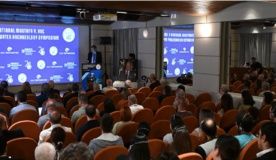
International Mustafa V. Koç Underwater Archaeology Symposium
#Prokonnesos quarry #Verde Antico #Marmor Docimium, Pavonazzetto, Afyon Violet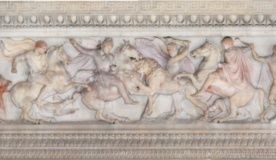
The Granikos Battlefield has been placed under protection
#Marmara marble #Prokonnesos marble #Granikos Battle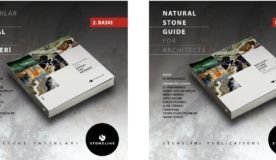
The Second Edition of Mimarlar İçin Doğal Taş Rehberi and the English Edition, Natural Stone Guide for Architects, Have Been Published
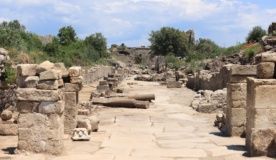
One of the main streets of Ancient Side has been unearthed
#conglomerate #Side Ancient City #Feriştah Alanyalı
The historic Yalı Pavilion is to be reconstructed
The theme of the Edirne Biennial: Bridges