Sagrada Família Becomes the World's Tallest Church
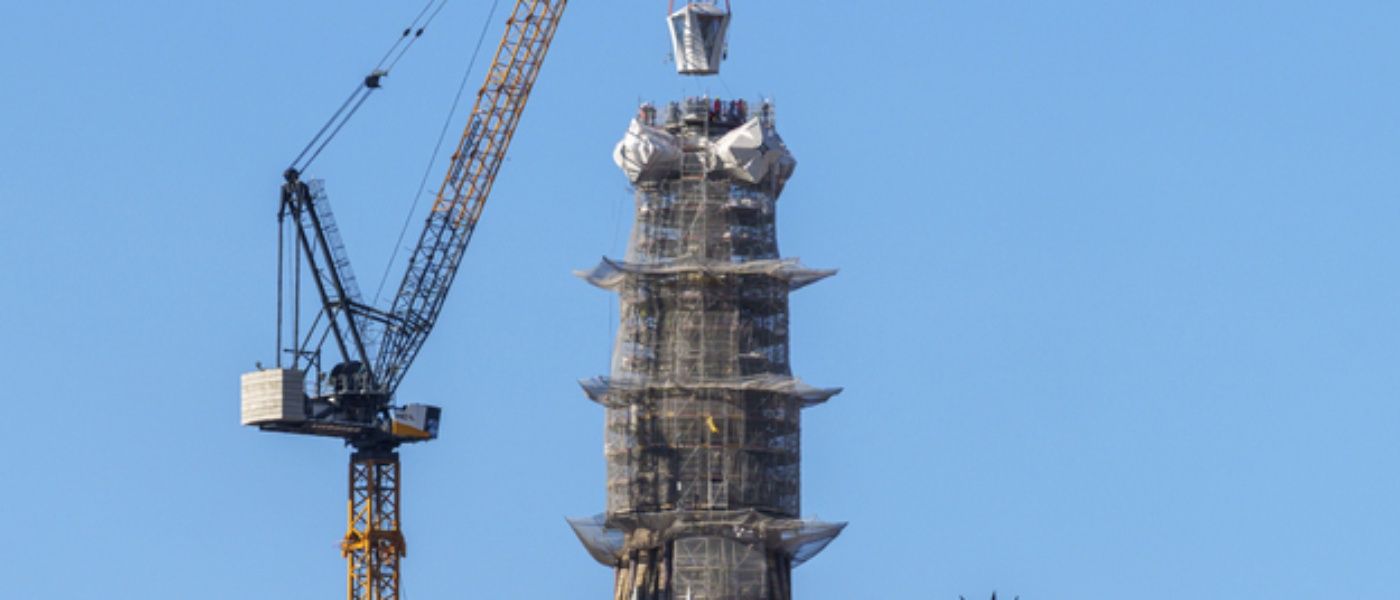
The Sagrada Família Basilica in Barcelona, Spain, which has been under construction since 1882, reached a height of 172.5 meters with the installation of a 17-meter-high white cross on top of its central tower, thus earning the title of the world's tallest church.
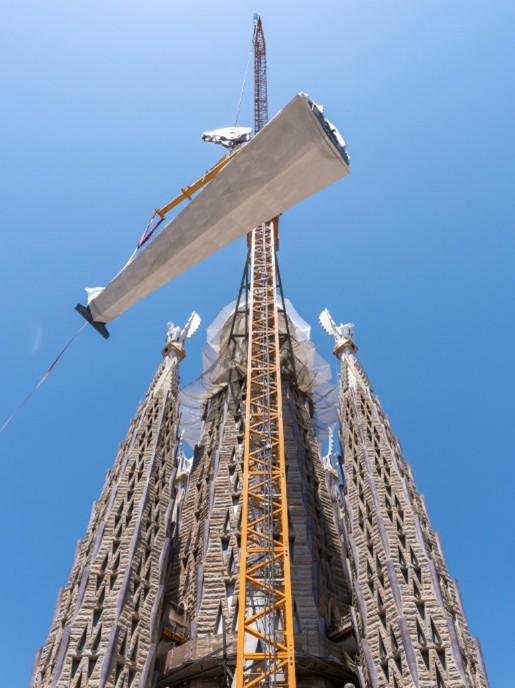
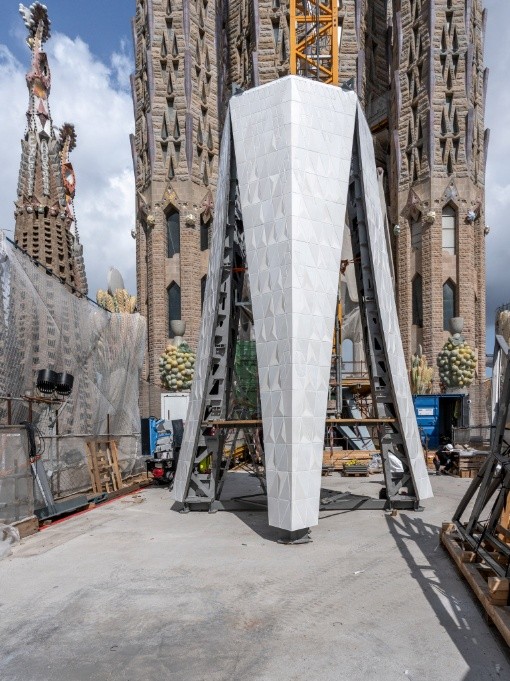
On February 23, the upper arm of the cross was installed on the Jesus Christ tower at the Sagrada Família. The cross was mounted using special scaffolding systems and safety ropes. Numerous tourists and Barcelona residents who followed the work on site witnessed this historic moment. This piece, measuring 4.5 x 4.5 x 4.9 meters, forms the highest point of the temple and completes the central tower group. The three-dimensional four-armed cross, covered in glass and white enamel ceramic and placed on the central tower, symbolizes the completion of work on the exterior of the tallest of the 18 towers designed by the famous Catalan architect Antoni Gaudí. The interior work on the structure will continue in 2027 and 2028. The large lantern, supported by four extremely tall columns, will be 176 meters above ground level and offer views of the surrounding area.
The Christ the Saviour Tower is the central tower of the Sagrada Família tower group. It is surrounded by the four Evangelist towers (each connected to the central tower by a bridge) and the Virgin Mary tower (connected internally to the Christ the Saviour Tower). The tower, which has 12 faces and stands 172.5 meters tall, was constructed with 12-story panels starting at a height of 85 meters above ground on October 16, 2018. These panels utilize a tensioned-stone building system that combines stone and steel. This system has made it possible for the panels to be constructed off-site and then transported to the Temple, where they are installed layer by layer as they are completed. The final layer was completed on December 4, 2024, reaching a height of 142.5 meters.
The Stones of the Sagrada Família
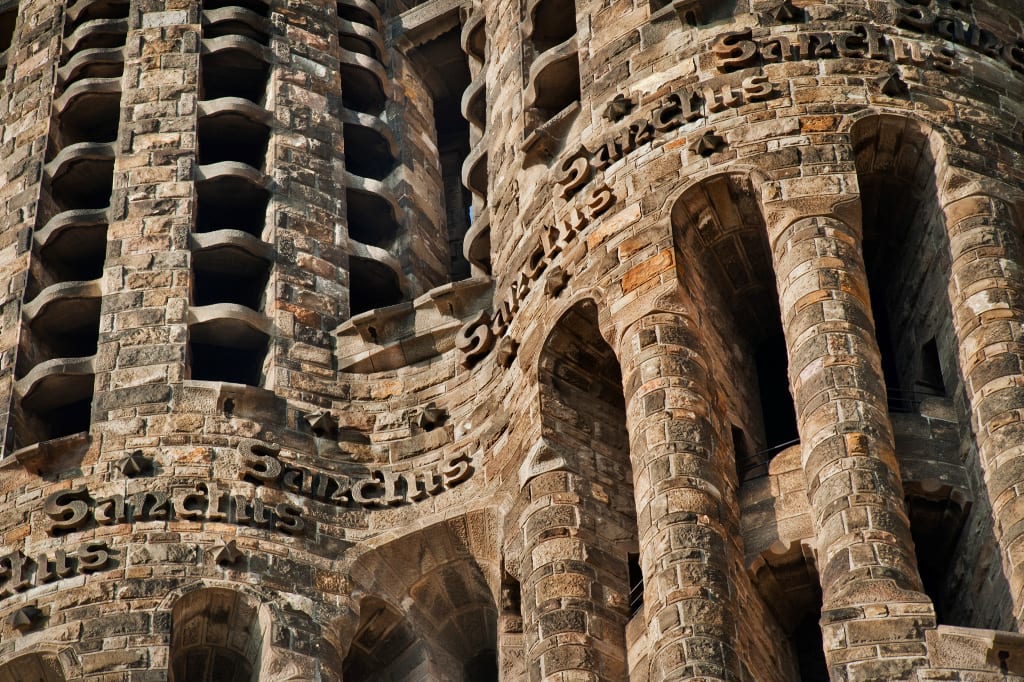
Montjuïc Mountain is an important part of Barcelona's unique skyline. The stone found here has been used in construction since the Iberian period and played a very important role during the Roman period. The use of this stone for Barcelona's buildings and infrastructure continued into the 20th century. The Sagrada Família is one such example.
Montjuïc stone is known for its silica content, which gives it a much stronger consistency than many other sedimentary rocks. However, one of the most valued characteristics of Montjuïc stone by architects is its color. The color range extends from light gray, greenish gray, beige, green, dark yellow, and gold to purple and red.
The columns inside the Sagrada Família, one of Antoni Gaudí's most significant contributions to the world of architecture, are unique in their shape (double-curved) and tree-like structure, enabling them to absorb and distribute the weight of the temple.
Referencing Antoni Gaudí's stone tests, when construction of the columns began in the late 1980s, it was decided that the twelve-sided columns would be made of red granite porphyry, the strongest stone used in the construction; the ten-sided columns of black basalt; the eight-sided columns of gray granite; and the six-sided columns of yellowish sedimentary sandstone. This choice of materials and colors enhanced the existing hierarchy of the columns while also enriching the interior of the temple.
Gaudí realized that solid stone columns would be very large and almost cover the area on the ground floor of the Temple. Therefore, as the project developed, according to a conversation he had with Cèsar Martinell in 1915, which appears in the book Gaudí i la Sagrada Família comentada per ell mateix, he considered making the four main columns out of iron and possibly painting them gold. Ultimately, as explained by his right-hand man Domènec Sugranyes, in a 1923 lecture (at the Catalan Architects' Association) on the Temple's structure, he decided to use reinforced concrete. Thus, the stone became an outer cladding surrounding the internal concrete structure.
Antoni Gaudí'nin mirası
The project's chief architect, Jordi Faulí, stated that the process went smoothly, saying, "It was a day we had been waiting for a long time, and everything went very well. The completion of the cross on the tower of Jesus Christ represents much more than the culmination of a construction phase: it is the result of years of studying and working on the legacy left to us by Antoni Gaudí. It is also a firm commitment to the future to continue working to complete the Sagrada Família."
The cross arrived in Barcelona in several pre-assembled modules on a 54-meter-high working platform on the central nave after being manufactured in Germany in 2025. These were hoisted up to be installed in seven pieces: the lower arm, the body, four arms, and today, February 20, 2026, the upper arm was put in place. The lower arm, the first piece of the cross, was installed on October 27, 2025, and the tower reached 162.91 meters. The white enamel ceramic tiles forming the base of the cross, the stone interior, and the glass were produced in factories and workshops in Catalonia.
With the completion of the Christ the King Tower, the Sagrada Família surpassed Germany's Ulm Minster to become the world's tallest church. This development, coinciding with the centenary of Antoni Gaudí's death, marks a historic milestone for the Sagrada Família and serves as a tribute to its architect. Commemorative events will be held throughout the year for this purpose. The program can be found at https://sagradafamilia2026.org/. For more information about the construction process of the cross, visit https://blog.sagradafamilia.org/.
The project, which began in 1882 and was suspended for a long time after Gaudí's death in 1926, continues to be Barcelona's most important tourist attraction today. Although the central tower has been completed, the basilica is not yet finished.
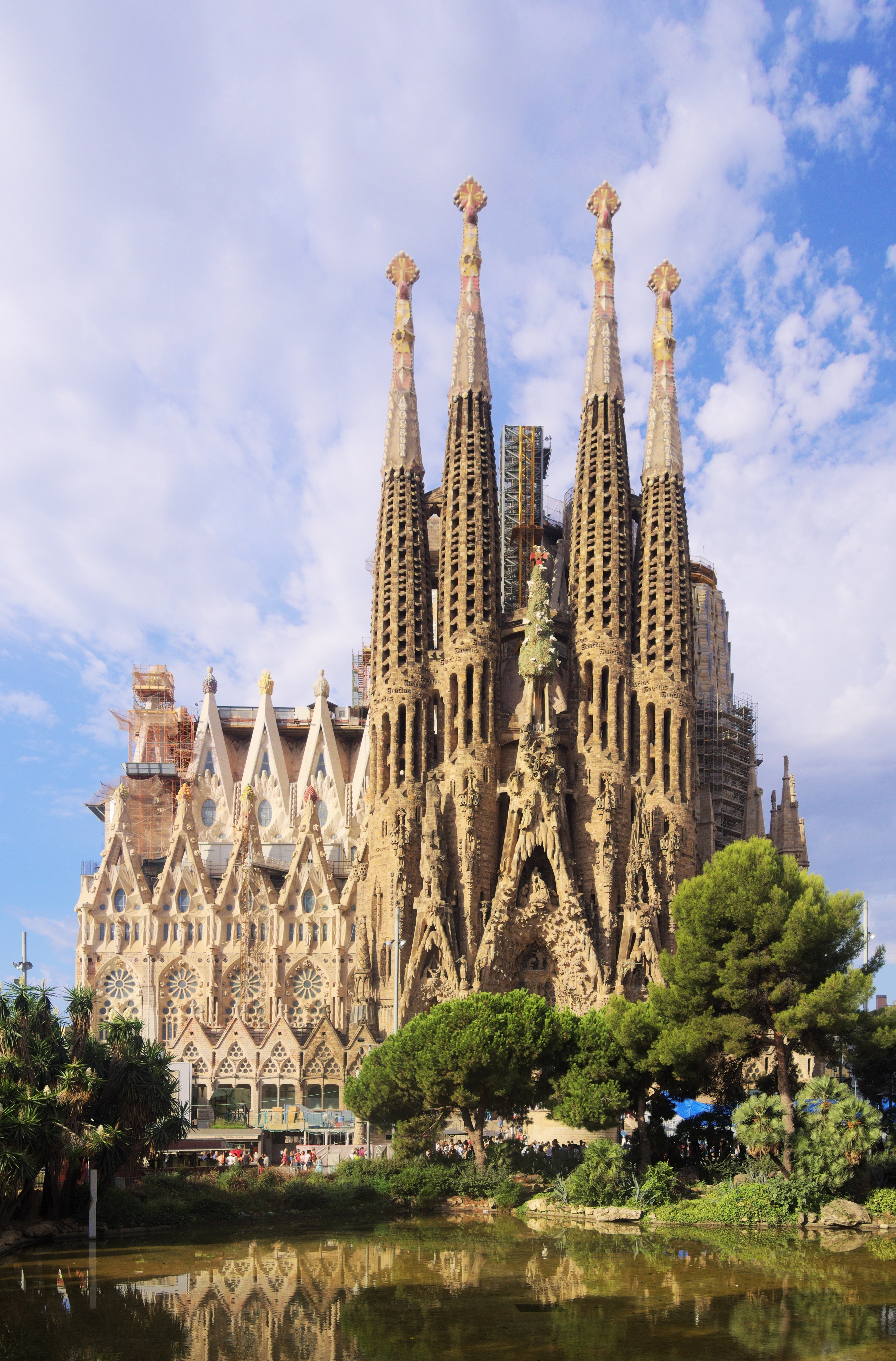
Kaynak: https://sagradafamilia.org/en/-/una-creu-que-arriba-al-cel-de-barcelona?redirect=%2Fen%2Fnews
Recent News
Street unearthed in Aspendos
Restoration of Haydarpaşa Station continues
#Haydarpaşa Train Station #Lefke Stone (sandstone) #Hereke Granite
Stoneline Publications’ third book: SELİMİYE
Sümela Monastery reopened to visitors
International Mustafa V. Koç Underwater Archaeology Symposium
#Prokonnesos quarry #Verde Antico #Marmor Docimium, Pavonazzetto, Afyon Violet
The Granikos Battlefield has been placed under protection
#Marmara marble #Prokonnesos marble #Granikos Battle
The Second Edition of Mimarlar İçin Doğal Taş Rehberi and the English Edition, Natural Stone Guide for Architects, Have Been Published
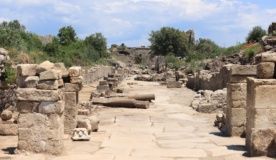
One of the main streets of Ancient Side has been unearthed
#conglomerate #Side Ancient City #Feriştah Alanyalı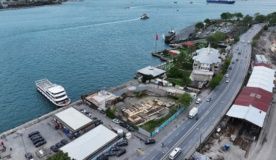
The historic Yalı Pavilion is to be reconstructed
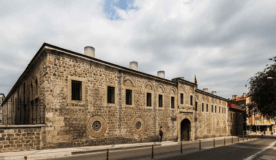
The theme of the Edirne Biennial: Bridges